Which tarot spread to use: one card, three, or the Celtic Cross, and why more cards is not always better
Published 03/08/2026 · 4 min read
Ten cards for a small question mostly adds noise, and makes it easier to find what you hoped to find. Here is how to match the spread to the question, plus the story of the 'ancient Celtic' spread that first appeared in 1910.
The commonest beginner mistake is to reach for the biggest spread available, on the theory that more cards means more information. That is half true. The other half is that more cards makes it easier to find what you already wanted to see.
Psychologists call this confirmation bias: given plenty of evidence to pick from, people notice the pieces that fit what they already believe and skim past the rest. Ten cards are ten pieces of evidence. If you are hoping to be told to quit your job, there will almost certainly be one or two cards in ten that read that way.
One card: when you need a direction
Good for open questions like "what should I pay attention to today". A single card leaves you nothing to select from, so you have to face the one that came up, even if you dislike it. It is the best spread for daily practice: one card in the morning, and in the evening a look at whether it had anything to do with the day.
It is a poor fit for a yes-or-no question about something large. One card cannot carry a decision of that size.
Three cards: when you need to see the flow
Three cards give the best ratio of information to clutter. The two most common sets of positions:
- Past, present, future: where the situation came from and where it is heading. Useful when you are not yet sure what is going on.
- Situation, action, outcome: useful when you already know the problem and want to know what to do about it.
Choose the positions before you draw, and do not change them after you see the cards. Moving positions so the card you like lands in "outcome" is the quickest way to make a reading say nothing at all.
Five cards for two people
This spread separates your side from theirs: what you feel, what they feel, what connects you, what stands in the way, and where the relationship is heading. It is most useful when you are struggling to tell what comes from you and what comes from them.
An honest caution: the "what they feel" position is the easiest to misread, because you have no way to check it. The best use of that card is as a question to bring to a conversation, not as an answer.
The Celtic Cross is not Celtic
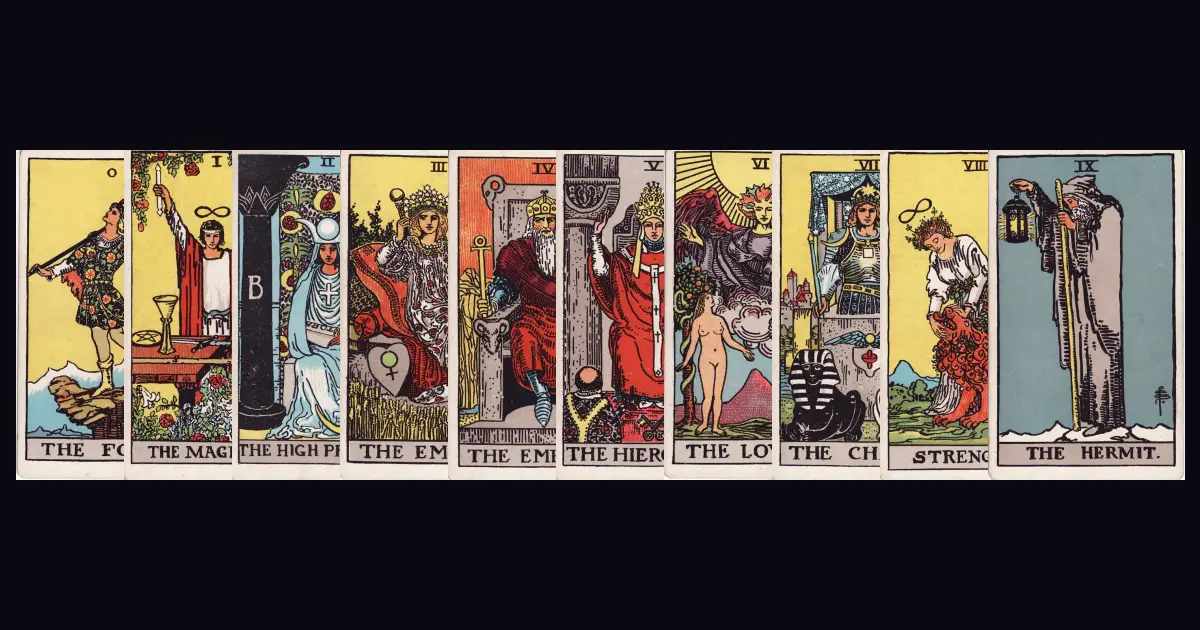
The most famous ten-card spread in the world first appears in Arthur Edward Waite's The Pictorial Key to the Tarot, published in 1910, a year after his deck. Waite presented it as an old method. No earlier source mentions it, and nothing ties it to Celtic culture.
That pattern runs all through tarot history. The cards appeared in fifteenth-century Italy as a playing deck, with rules and tricks. Only in 1781 did a French pastor, Antoine Court de Gébelin, write that they were the secret book of Egyptian priests, again with no evidence. The label of antiquity usually gets added later, and it gets added because it makes people believe.
Knowing this does not make the Celtic Cross less useful. It is still a way of splitting a question into ten angles, and several of those angles are well worth asking about: what is blocking you, how others see it, what you are afraid of. What goes is only the glow of age, and that is no loss. If you pick a spread because it sounds ancient, you are picking it for a reason that has nothing to do with your question.
The Celtic Cross: when the question really is large
Ten cards take at least fifteen minutes to read properly and can easily overwhelm. Save it for big decisions, and read in order: the whole layout first, counting the Majors and noting which suit dominates, and only then the individual cards.
A quick chooser
- A small, everyday question: one card.
- Understanding something still unfolding: three cards, past–present–future.
- You know the problem and want to act: three cards, situation–action–outcome.
- Something between two people: the five-card relationship spread.
- A big decision, with time to sit and read: the Celtic Cross.
The Tarot tool on Thấu Mình has all of these, with topics that suggest questions. Pick a topic and the page proposes a matching spread, which you can change.
Tarot
How to read tarot at home as a beginner: six steps and one complete worked reading
You do not need a gifted deck, candles, or 78 meanings by heart. This walks through six steps, then does one real reading for the question “should I change jobs this year”, card by card.
20/09/2026 · 8 min read
Tarot
What reversed tarot cards mean: three schools, the man who first printed reversals on cards, and picking one to keep
What does an upside-down card mean? There are at least three widely used answers, and they contradict each other. This piece lays out all three, tells the story of the man who printed reversed meanings on cards in the 1780s, and names the one mistake worth avoiding.
23/08/2026 · 3 min read
Tarot
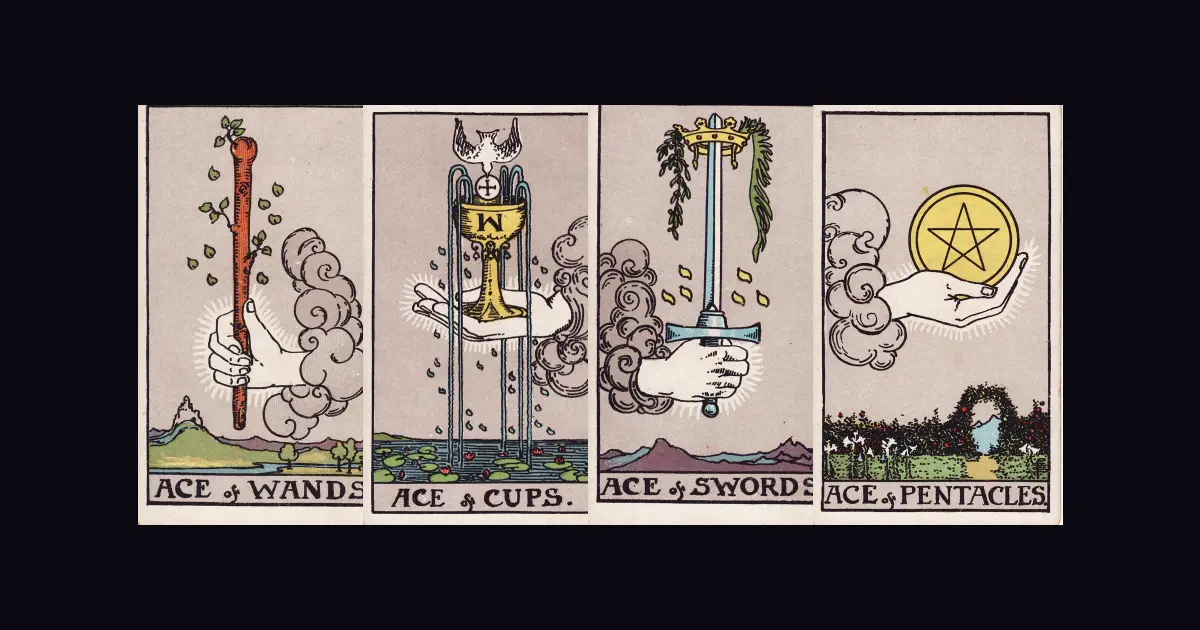
The 56 Minor Arcana: four suits, four ranks, and the 1491 deck Pamela Colman Smith borrowed from
The Majors describe the big movements; the Minors describe this week. This piece explains the four suits, how to read the court cards, and the little-known story of where the familiar Minor Arcana pictures came from.
18/08/2026 · 4 min read