Tử Vi chart
Enter your Gregorian birth date and time to cast a chart. The page converts to the lunar calendar, places the Mệnh and Thân palaces, works out the cục, sets the fourteen major stars, and reads the current day, month and year against the result.
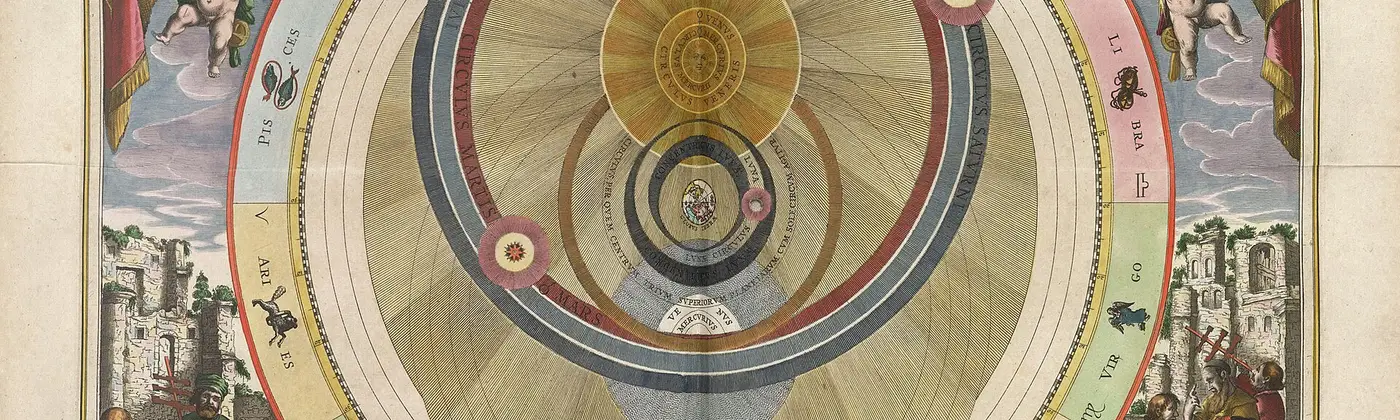
Andreas Cellarius · Public domain
About the Tử Vi chart
Tử Vi Đẩu Số is a Chinese system of chart reading, traditionally dated to the Song dynasty. It works quite differently from the animal signs: instead of one creature for a whole year, it builds a chart specific to one person from their date and hour of birth, and places more than a hundred stars into twelve palaces.
The twelve palaces
The chart divides into twelve cells, each responsible for an area of life:
- Mệnh, the self — character and general direction. The palace read first.
- Parents, siblings, spouse, children, friends — the relationships, in that order.
- Career, wealth, property — work, money, and the home.
- Travel — journeys and the outside environment.
- Health — the body and recurring obstacles.
- Fortune and virtue — the inner side: what makes you feel you have enough.
The major stars
Of the hundred-odd stars, fourteen are called major stars and they drive most of the reading. Whichever sits in the self palace is the first thing any reader will ask about.
A palace with no major star is called empty. This is not bad — it simply means the reading borrows the stars from the opposite palace.
Why the birth hour is required
This is the largest difference between the chart and every other tool here. The birth hour fixes the position of the self palace, and the self palace fixes the position of the other eleven. One two-hour period out and the whole chart shifts by one cell, and every conclusion shifts with it.
Hours are counted in the traditional two-hour periods: the hour of the Rat runs from 11pm to 1am, the Ox from 1am to 3am, and so on. Without a birth hour a chart can still be drawn, but the reading is far less reliable, and the site says so rather than staying quiet about it.
How it differs from Western astrology
Both build a chart from a birth moment, and there the resemblance stops. Western astrology places actual planets against a zodiac defined by the seasons. Tử Vi Đẩu Số places symbolic stars — most of which correspond to no physical body — into a grid derived from the lunar calendar and the birth hour.
The practical difference for a reader: a Western chart is usually read as a whole personality, while a Tử Vi chart is read palace by palace, one area of life at a time. If your question is specific, the second structure gives you somewhere obvious to look.
What order to read it in
Beginners tend to open a chart and read in every direction at once, and end up with a pile of contradictions. A useful order: read the self palace first for a footing, then the palace matching the question you actually have — career for work, spouse for relationships. Read the opposite palace immediately afterwards, because in this system two facing palaces always bear on each other.
It is not a prediction
Tử Vi Đẩu Số is an old and intricate symbolic system, not a validated forecasting model. This site presents it fully and with respect, but does not claim it is true in a scientific sense. The most useful part of a chart is usually the questions it forces about each area of life — which one you are pouring everything into, and which one you have left empty.