What reversed tarot cards mean: three schools, the man who first printed reversals on cards, and picking one to keep
Published 23/08/2026 · 3 min read
What does an upside-down card mean? There are at least three widely used answers, and they contradict each other. This piece lays out all three, tells the story of the man who printed reversed meanings on cards in the 1780s, and names the one mistake worth avoiding.
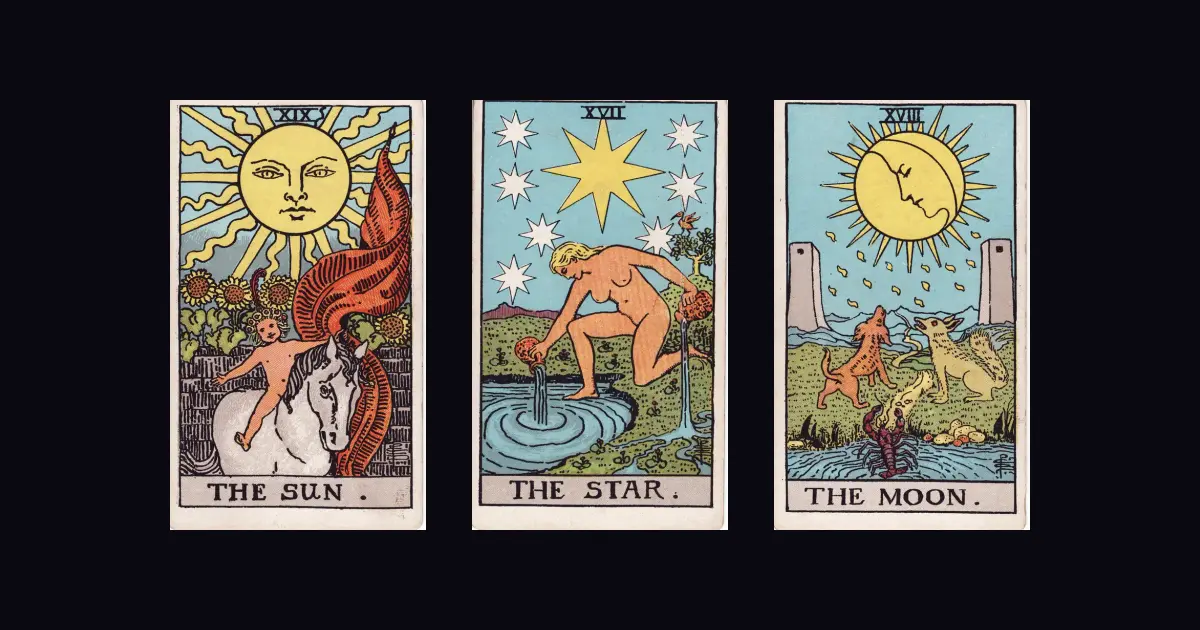
There is no shared rule for reversals, however confidently some books write as if there were. What exists is a handful of common approaches, each consistent on its own terms, and mixing them is the source of most of the confusion people feel when reading.
The man who printed reversals on the cards
In 1780s Paris a man named Jean-Baptiste Alliette, writing as Etteilla, his surname spelt backwards, began publishing books and decks made specifically for fortune-telling. He is counted among the first to turn tarot reading into a profession.
His deck had a feature most earlier decks lacked: each card carried two printed meanings, one readable when the card lay upright and one readable when it was upside down. From then on, reversed meanings became part of how cards were read in Europe. More than a century later Arthur Edward Waite gave every card of his 1909 deck both an upright and a reversed meaning, and that habit has travelled with the world's most popular deck ever since.
In other words, reversals are not a law of nature built into the cards. They are a convention set by particular readers, and each set it a little differently.
School one: the opposite meaning
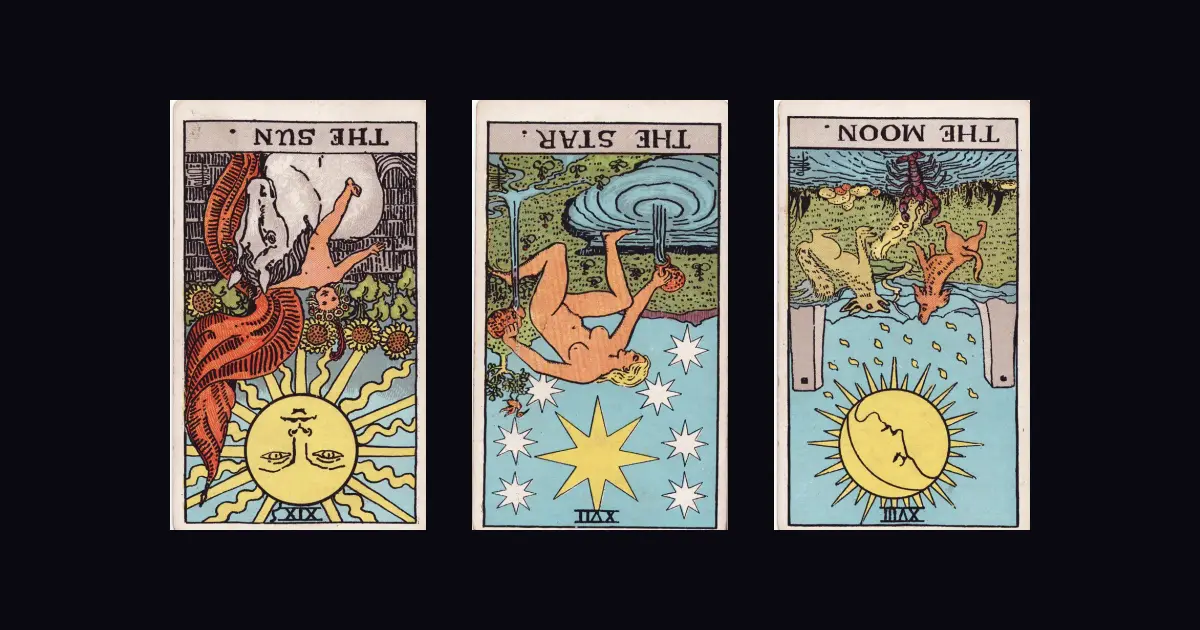
A reversed card means the reverse of the upright one. The Sun upright is joy; reversed, it is sadness. This is the easiest to learn and the crudest: it turns 78 cards into 156 meanings, half of them mere negations of the other half, and throws away most of what the picture actually shows.
School two: blocked or delayed energy
The reversed card keeps the upright card's energy, but that energy is blocked, late, or not yet in use. The Sun reversed is not sadness; it is joy with something in the way, something standing between you and what ought to be going well.
This is the approach most modern tarot books use, and it usually produces a richer reading than school one, because it keeps the card's subject and changes only its state.
School three: turned inward
An upright card speaks about what is happening outside; a reversed one about what is happening inside you that nobody sees yet. The Sun reversed is joy you have but have not said out loud, or have not yet allowed yourself.
This suits questions about yourself and fits poorly with questions about outside events such as work or money.
And a fourth: no reversals at all
Plenty of long-time readers do not use reversals. They turn every card the same way up before laying them out. Their argument: 78 cards are nuanced enough, and cards like the Five of Cups or the Ten of Swords already hold their difficulty, without a second axis to say so.
One card, read all four ways
Say you ask about work and draw the Star reversed.
- School one: hope lost, the road ahead gone dark.
- School two: hope is there but pressed down, perhaps by an unrealistic expectation or by someone who keeps discouraging you.
- School three: you still quietly believe in a direction but have not dared to tell anyone.
- No reversals: read it as the Star upright, grounded hope, and look at the cards around it for what is making that hope hard to see.
Four approaches, four different readings, and none of them wrong. That is exactly why choosing one in advance matters so much.
The one mistake to avoid
Any approach works. The only one that does not is switching mid-reading: drawing a reversed card and only then deciding which school to read it by, and picking whichever gives the kinder answer. That reading no longer says anything, because you wrote the answer before you looked at the card.
Pick one, write the choice down, and keep it for at least a few months. In the Thấu Mình Tarot tool you can switch reversals on or off before drawing, and every card page gives both the upright and reversed meaning according to school two, the most widely used.
Tarot
How to read tarot at home as a beginner: six steps and one complete worked reading
You do not need a gifted deck, candles, or 78 meanings by heart. This walks through six steps, then does one real reading for the question “should I change jobs this year”, card by card.
20/09/2026 · 8 min read
Tarot
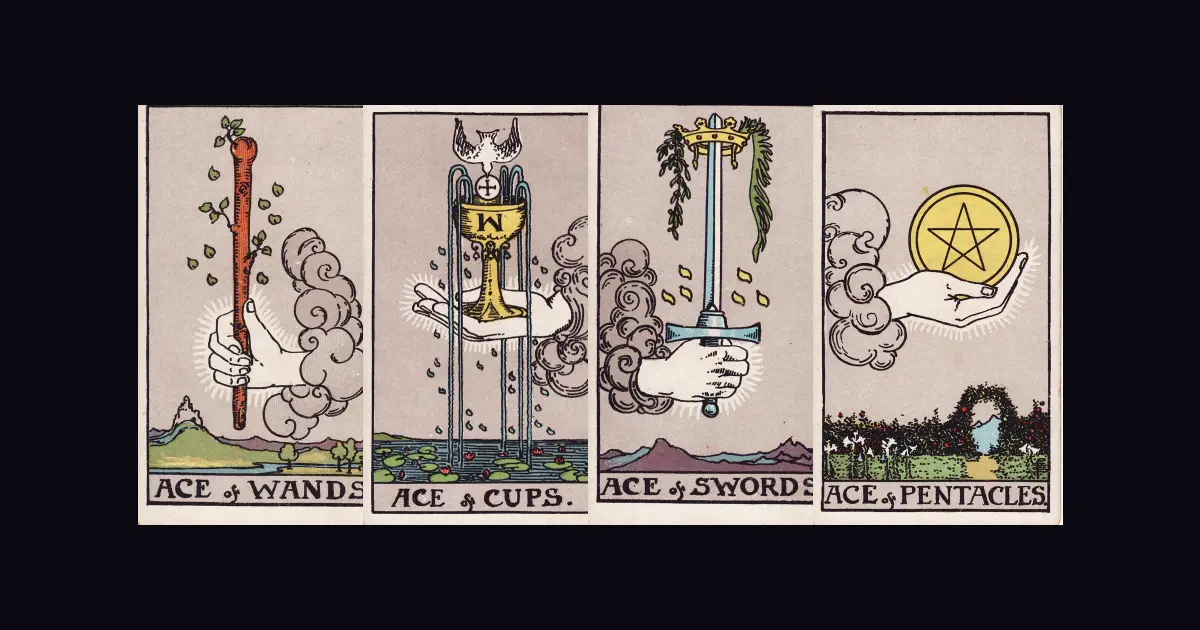
The 56 Minor Arcana: four suits, four ranks, and the 1491 deck Pamela Colman Smith borrowed from
The Majors describe the big movements; the Minors describe this week. This piece explains the four suits, how to read the court cards, and the little-known story of where the familiar Minor Arcana pictures came from.
18/08/2026 · 4 min read
Tarot
Which tarot spread to use: one card, three, or the Celtic Cross, and why more cards is not always better
Ten cards for a small question mostly adds noise, and makes it easier to find what you hoped to find. Here is how to match the spread to the question, plus the story of the 'ancient Celtic' spread that first appeared in 1910.
03/08/2026 · 4 min read