How to read tarot at home as a beginner: six steps and one complete worked reading
Published 20/09/2026 · 8 min read
You do not need a gifted deck, candles, or 78 meanings by heart. This walks through six steps, then does one real reading for the question “should I change jobs this year”, card by card.
Beginners are often told that their first deck has to be a gift, and that a deck you buy yourself will not work. It gets repeated so often that people assume it is an ancient rule. It is not even a century old, and the actual history of tarot is far more interesting.
The oldest surviving tarot decks were painted by hand in northern Italy in the fifteenth century, for noble families such as the Visconti and the Sforza in Milan. They were used to play a card game called tarocchi, a trick-taking game not unlike bridge. For more than three hundred years nobody used them to tell fortunes.
The turn came in 1781, when a French clergyman named Antoine Court de Gébelin wrote that tarot was the secret book of the priests of ancient Egypt, hidden inside a pack of cards to survive the ages. He had no evidence for it, and historians have since confirmed there is none. But the story was irresistible, and tarot has been a divination tool ever since.
Knowing this helps a beginner in one very practical way: there is no ritual you have to get right before you start. What you need is a clear question, a spread that suits it, and the habit of looking at the pictures rather than memorising meanings.
Step 1: write the question down
The question decides most of how good a reading will be. Beginners tend to ask things like “Does he love me?” or “Will I get a raise next month?” Both share a problem: the answer lies in someone else's hands, and whatever the cards say, there is nothing you can do with it.
Try rewriting them so the answer lies in yours: “What do I need to understand about this relationship?” or “What should I focus on to give myself a chance of a raise?” A question like that leaves you something to do after the cards are put away.
And write it on paper rather than just thinking it. A question you write down is usually shorter and more honest than one you only think, because writing forces you to choose the words.
Step 2: choose a spread that fits the question
Beginners do well with two spreads. One card for small daily questions, such as “what should I pay attention to today”. Three cards for questions that unfold over time, with the familiar positions of past, present and future.
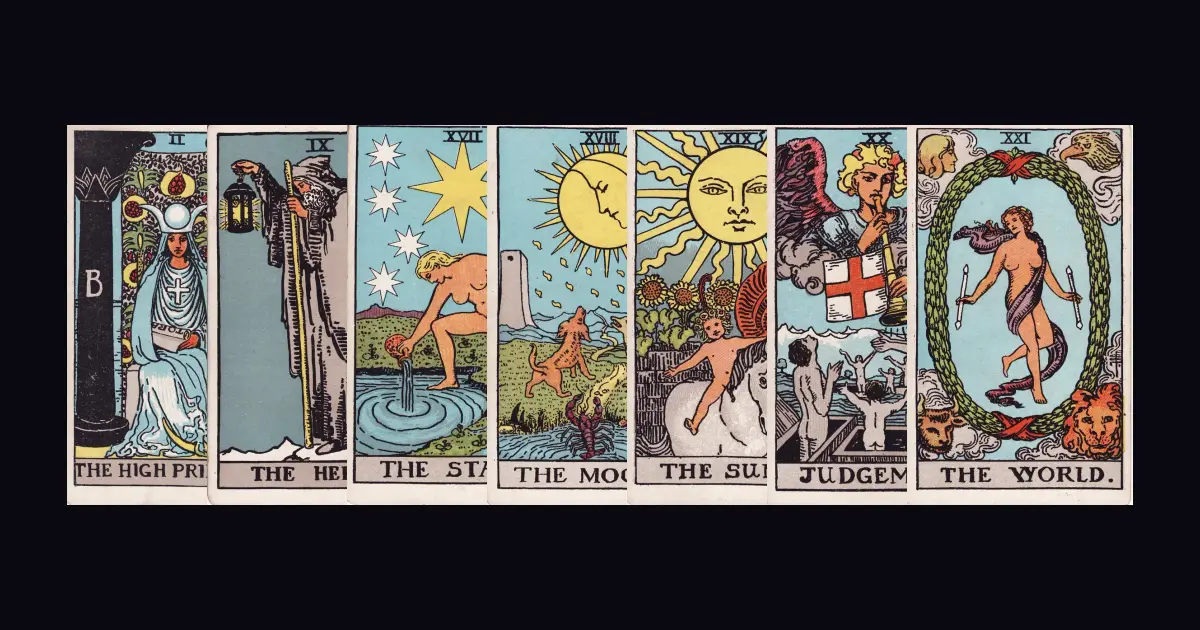
Large spreads like the ten-card Celtic Cross are beautiful and full of information, but a beginner laying out ten cards usually gets overwhelmed and reads ten disconnected sentences. This site has a separate piece on matching a spread to a kind of question if you want to go further.
Step 3: shuffle, draw, and do not redraw
No way of shuffling is more correct than another. Some people riffle like a card player, some spread the cards on the table and mix them with both hands, some shuffle until it feels like enough. One traditional method is to cut the deck into three piles with your left hand after shuffling and stack them back in a different order. There is nothing magical in it, but it gives you a few seconds to pause and think about the question.
If you use an online spread tool, such as the one on Thấu Mình, the shuffle happens randomly on your own device. The result is no worse than paper, and you can save or print it to read again later.
The most important rule at this stage: once drawn, keep it. Beginners very often redraw because they dislike the card that came out. If you keep drawing until you get the card you wanted, you are no longer asking the cards anything, you are answering yourself. And the discomfort you feel about the first card is often the part most worth reading.
Step 4: one worked reading, card by card
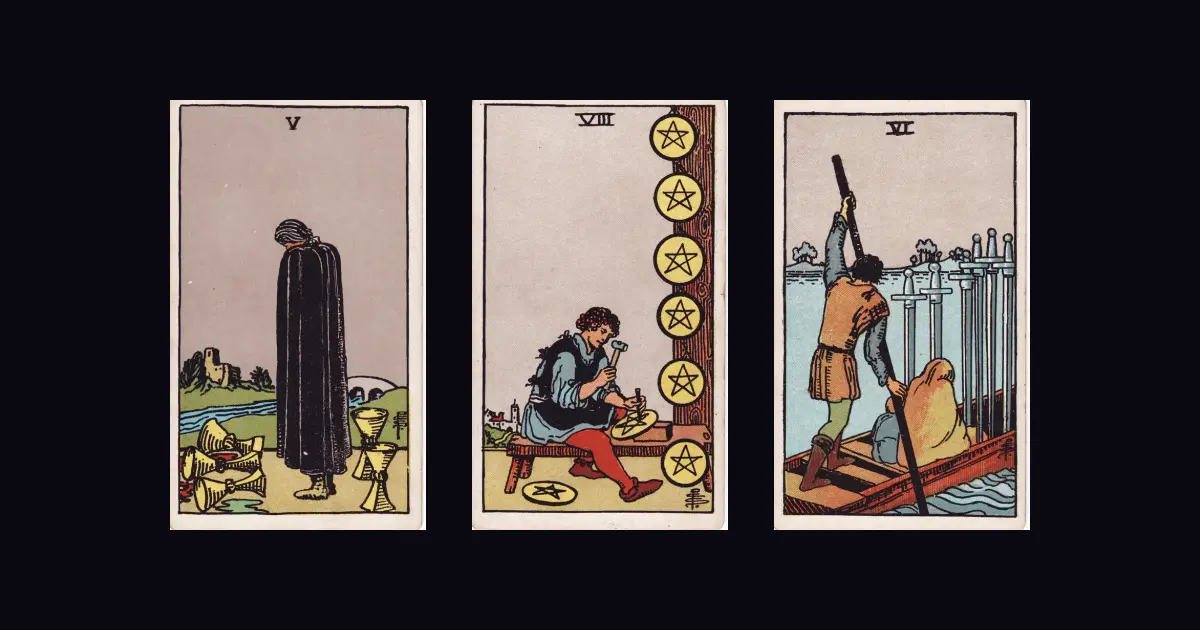
To see the steps in action, here is a real reading. The person asking is a thirty-year-old office worker who has been with the same company for five years. The question, written on paper: “What do I need to understand before deciding whether to change jobs this year?” The spread: three cards, past, present, future.
Past, the Five of Cups. A figure in a black cloak stares down at three spilled cups. Behind them two cups are still standing, but they do not turn round to look. Applied to the question: something from earlier in this job still rankles, perhaps being passed over for a promotion, or a project that fell apart. The two upright cups are a reminder that not everything was lost.
Present, the Eight of Pentacles. A craftsman sits carving coins one by one, six already finished and hung on the wall. This is the card of steady practice. Applied to the question: this person is doing good work right now and their skill is growing, even if nothing about it is glamorous. The card raises an awkward counter-question: do I want to leave because this job has stopped teaching me anything, or because the thing in the first card still hurts?
Future, the Six of Swords. A ferryman takes a woman and a child across to the far bank. The water behind is choppy, the water ahead calmer. In many readings this is the card of moving on, and it is usually counted as favourable for a question about changing jobs or homes. But notice the detail: six swords are still standing in the boat. The passengers are taking them to the new shore.
Step 5: read the three as one story
Reading each card is half the work. The other half is joining them up. For this reading the story might go like this: the person is carrying a regret from the past, is doing good and steady work in the present, and the road ahead most likely involves a move. But the swords in the boat say that leaving without dealing with the regret in the first card means taking it along to the next company.
A good reading usually ends in something to do rather than a verdict. Here it might be: before applying anywhere else, have a direct conversation with the current manager about what went wrong. If you still want to go after that, then it is time to go.
Step 6: write it down, and reread it in three months
This is the step nearly every beginner skips, and the one that improves you fastest. Write down the date, the question, the three cards and how you read them. Open the notebook again three months later.
You will notice two things. Your way of reading has changed, and the old reading looks more naive than you expected. And the readings that turned out most useful were the ones that made you do something differently, not the ones that happened to predict an event.
What about reversed cards
When you shuffle, some cards come out upside down. Some readers give reversed cards their own meaning, usually blocked, delayed or turned inward. Others ignore reversals and simply turn the card the right way up.
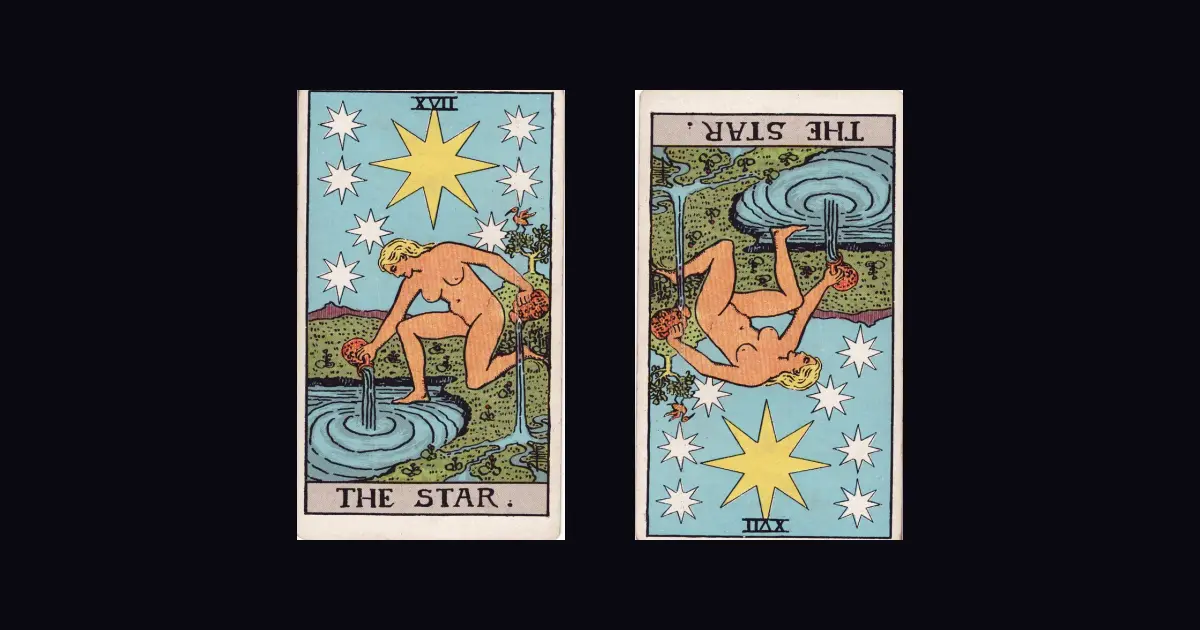
For a beginner the practical advice is to pick one approach and keep it for at least a few months. Switching depending on which card comes up means never getting used to the deck. This site has a separate piece comparing three schools of reading reversals.
The three most common mistakes
- Asking the same question several times in a day. The second and third attempts are usually just looking for the answer you wanted. If you need to ask again, wait a few days, until the situation has actually changed.
- Looking up the meaning before looking at the picture. Pamela Colman Smith, who drew the deck in 1909, made every card a scene with people doing something. Look at the picture for five seconds before checking the meaning and it will stay with you far longer.
- Letting the cards make large decisions for you. Tarot is good for seeing a problem from another angle. It is not for deciding whether to sign a contract, end a relationship or resign.
If you want to try now and do not have a deck, the tarot tool on Thấu Mình has all 78 cards, suggested questions by topic, and a full page for every card you draw, including what is in the picture. It is completely free.
Tarot
What reversed tarot cards mean: three schools, the man who first printed reversals on cards, and picking one to keep
What does an upside-down card mean? There are at least three widely used answers, and they contradict each other. This piece lays out all three, tells the story of the man who printed reversed meanings on cards in the 1780s, and names the one mistake worth avoiding.
23/08/2026 · 3 min read
Tarot
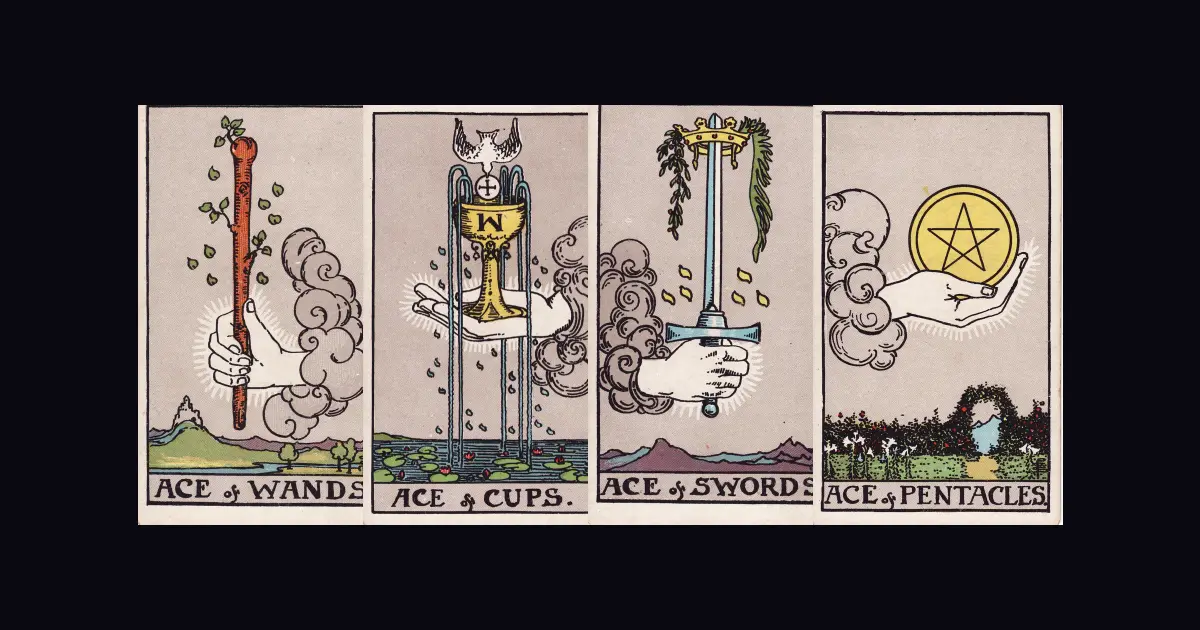
The 56 Minor Arcana: four suits, four ranks, and the 1491 deck Pamela Colman Smith borrowed from
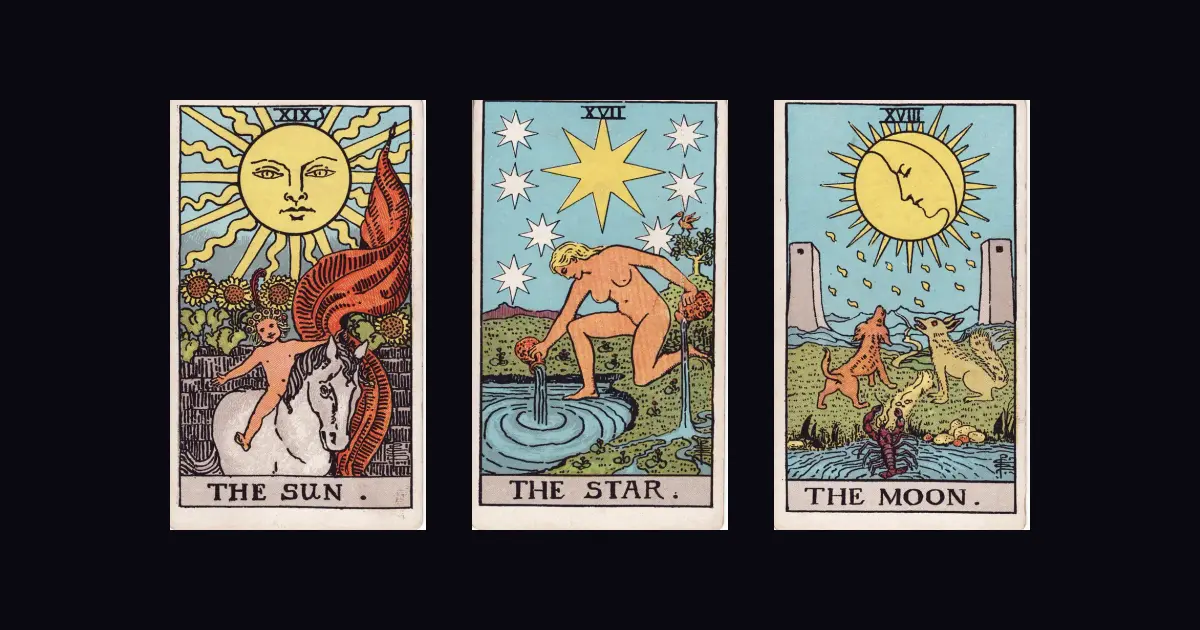
The Majors describe the big movements; the Minors describe this week. This piece explains the four suits, how to read the court cards, and the little-known story of where the familiar Minor Arcana pictures came from.
18/08/2026 · 4 min read
Tarot
Which tarot spread to use: one card, three, or the Celtic Cross, and why more cards is not always better
Ten cards for a small question mostly adds noise, and makes it easier to find what you hoped to find. Here is how to match the spread to the question, plus the story of the 'ancient Celtic' spread that first appeared in 1910.
03/08/2026 · 4 min read