What the 22 Major Arcana are about, and when a spread full of them actually means something
Published 04/07/2026 · 4 min read
A three-card spread turns up two or more Major Arcana about one time in five. This piece covers how the 22 are read as a journey, who painted them, and why Death and the Tower are less frightening than their names.
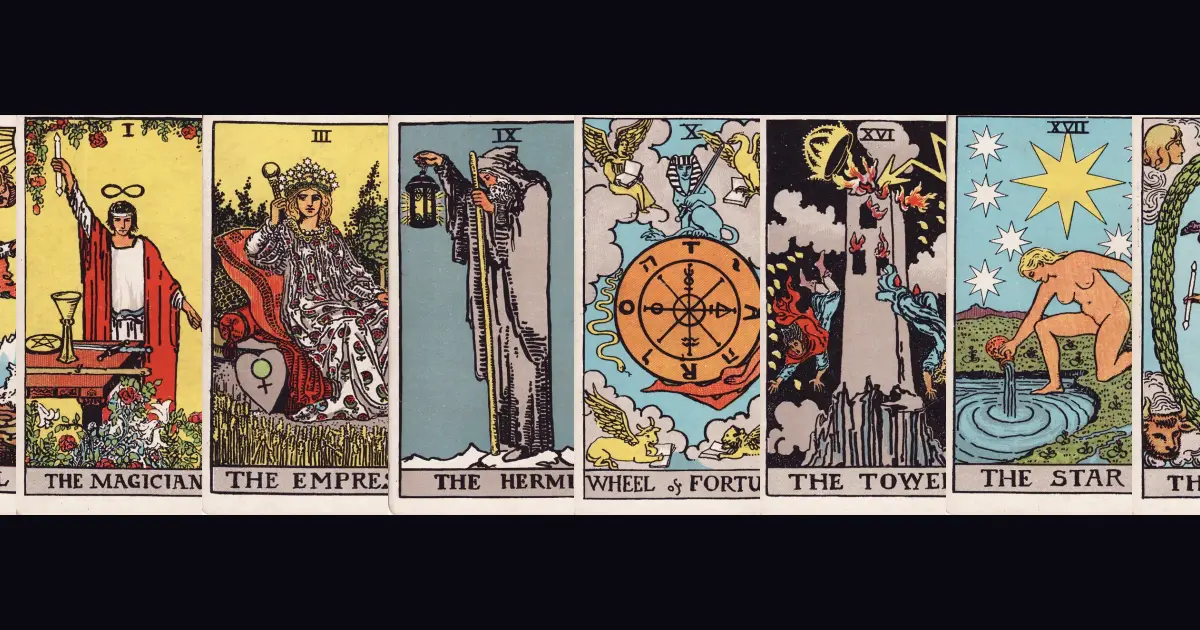
People new to tarot tend to share two reflexes. Draw Death and you flinch. Draw two or three Majors in one spread and you assume something big is going on. The second reflex has more behind it than the first, but only partly.
The 78 cards split into two very different groups. The 56 Minor Arcana deal with ordinary life: work, money, moods, conversations. The 22 Major Arcana deal with larger themes, the kind that shape a whole stretch of life rather than a week. This piece walks through those 22, then answers the question every learner eventually asks: how many Majors count as a lot?
Three stages of one journey
Many modern readers treat the 22 Majors as one continuous story, usually called the Fool's journey. Card 0 is a young man stepping off a cliff edge, and the other 21 are what he meets along the way. The reading spread widely through American tarot guides in the 1960s and 1970s, and it divides the Majors into three stages that are easy to remember:
- The Fool to the Chariot (0 to 7): building a self in the outside world. Learning, choosing, establishing who you are.
- Strength to Temperance (8 to 14): turning inward. Looking back, letting go, finding balance.
- The Devil to the World (15 to 21): transformation. Facing the dark, letting the old structure fall, rebuilding at another level.
This is not an ancient rule, and the woman who painted the deck in 1909 left no note saying she thought of it this way. It is useful all the same. When a Major appears, you know at once which stage it belongs to, and that is often the first clue to where in life your question actually sits.
How many Majors is a lot
This is the part tarot books rarely do: the counting. The deck has 22 Majors in 78 cards, about 28 per cent. Draw three cards at random and:
- About 36 per cent of the time there is no Major at all.
- About 45 per cent of the time there is exactly one.
- About 17 per cent of the time there are two.
- Only about 2 per cent of the time, one draw in fifty, are all three Majors.
So one Major in a three-card spread is the most ordinary result there is; it happens close to half the time. Two is about one draw in five, worth a look but hardly rare. Three is where the line "this is bigger than you think" has real weight behind it.
In a ten-card Celtic Cross you should expect nearly three Majors on average. Only five or more, which happens about one time in ten, is worth reading as a signal. The Thấu Mình spread tool does this count for you and says plainly whether your draw is ordinary or unusual.
Why Death and the Tower are not what their names suggest
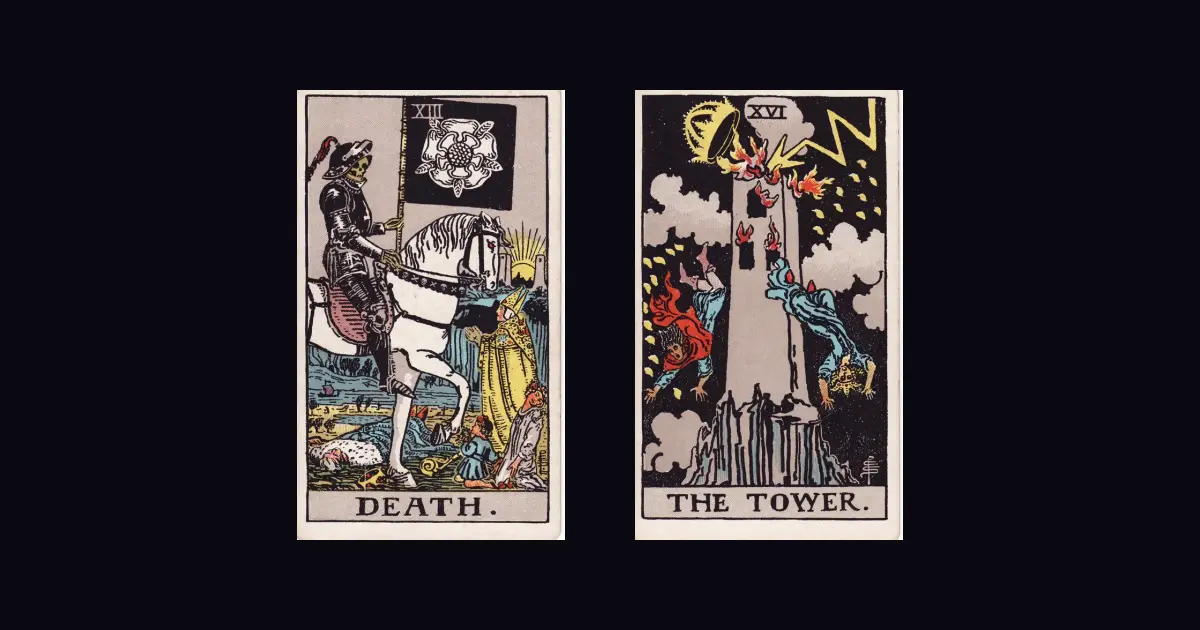
These two frighten beginners more than any others, and both are about the end of a structure, not the end of a person.
Death is an orderly ending. A skeleton in armour rides a white horse; a king has fallen, a bishop pleads, a child looks straight at it. Nobody is exempt. But on the horizon the sun is rising between two towers. One chapter closes so the next can open.
The Tower is a sudden ending. Lightning strikes the top, two figures fall. The detail worth noticing is that the tower stands on a bare crag, and what flies off is the crown set on its summit. What falls is the part placed on top, not the ground beneath. What the two cards share: the thing being torn down had usually stopped fitting a while ago.
The painter nobody named for almost a century
The best-known deck in the world was painted in 1909 by Pamela Colman Smith, a London-born artist raised between England and Jamaica who illustrated books and designed for the stage. Arthur Edward Waite hired her to paint all 78 cards for a single flat fee: no percentage, no royalties.
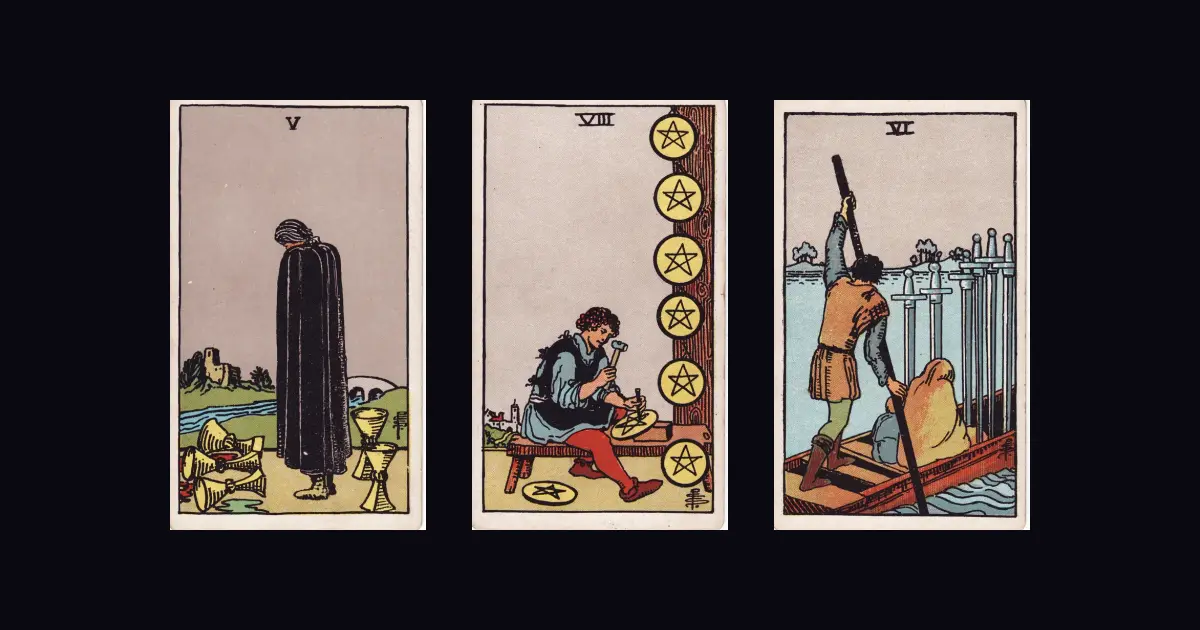
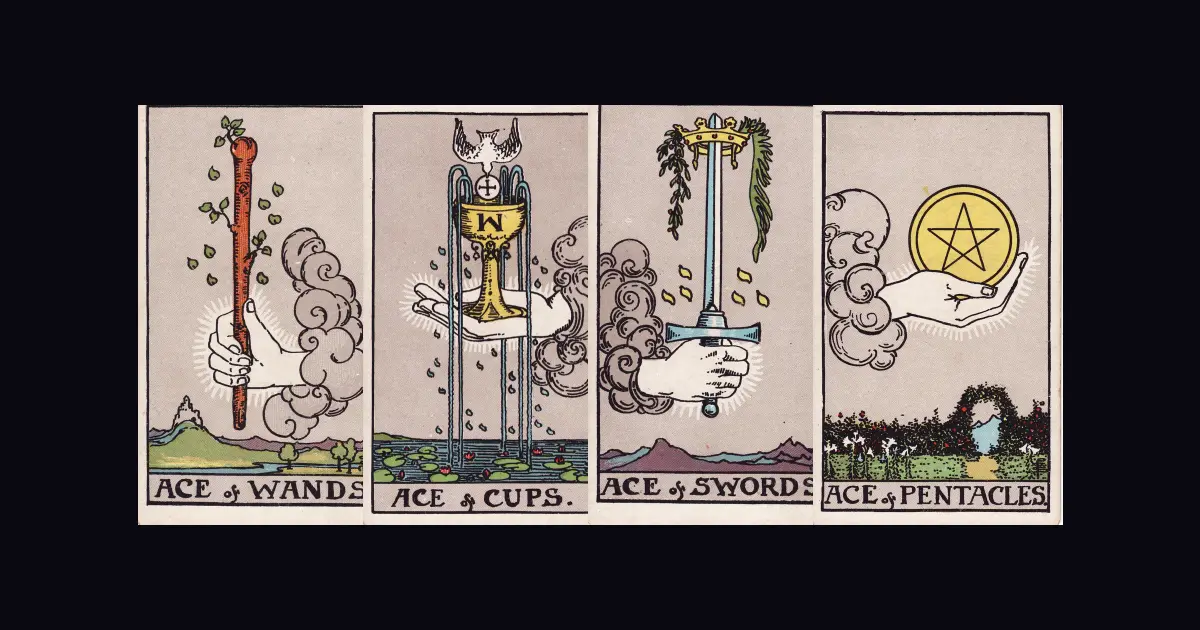
The decision that made this deck beat every other was hers: to paint a scene with people in it for all 56 Minor Arcana. In older decks the Minors were pip cards; three cups were simply three cups. Smith turned them into moments you could read, which is why beginners today can learn tarot from this deck at all.
The deck was named after Rider, the publisher, and Waite. Her name was not on the box. Smith died in 1951 in poverty; her belongings were sold to pay debts and her grave went unmarked. Only in recent decades has her name been added, making it Rider–Waite–Smith.
This site uses all three names, and not just out of courtesy. When a Major seems to say something to you, what is speaking is a specific painter's choice of composition: why the dog is at the Fool's heel, why the Hanged Man looks so calm. Every card page on Thấu Mình describes what is in the picture, and reading that before the meaning tends to make it stick far longer.
Tarot
How to read tarot at home as a beginner: six steps and one complete worked reading
You do not need a gifted deck, candles, or 78 meanings by heart. This walks through six steps, then does one real reading for the question “should I change jobs this year”, card by card.
20/09/2026 · 8 min read
Tarot
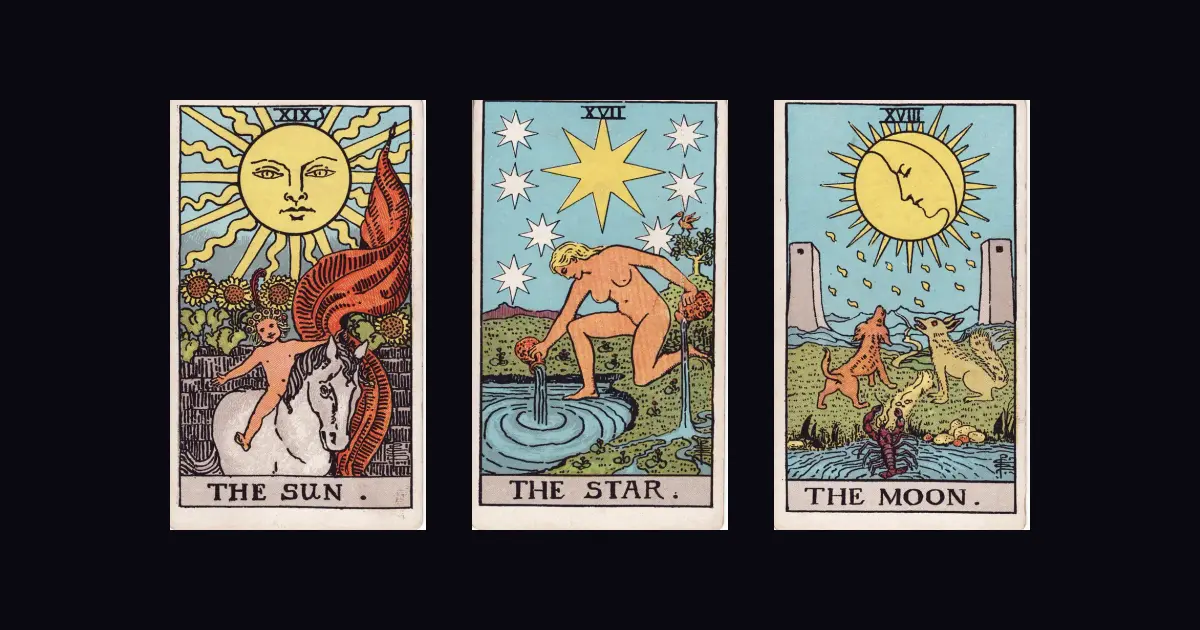
What reversed tarot cards mean: three schools, the man who first printed reversals on cards, and picking one to keep
What does an upside-down card mean? There are at least three widely used answers, and they contradict each other. This piece lays out all three, tells the story of the man who printed reversed meanings on cards in the 1780s, and names the one mistake worth avoiding.
23/08/2026 · 3 min read
Tarot
The 56 Minor Arcana: four suits, four ranks, and the 1491 deck Pamela Colman Smith borrowed from
The Majors describe the big movements; the Minors describe this week. This piece explains the four suits, how to read the court cards, and the little-known story of where the familiar Minor Arcana pictures came from.
18/08/2026 · 4 min read