What is DISC? The man who built both the lie detector and Wonder Woman
Published 18/09/2026 · 7 min read
The four letters every HR department uses have a father almost nobody can name. He lost a landmark court case, wrote a book about emotion in 1928, and later invented a heroine whose golden lasso makes people tell the truth.
In December 1941 an American comic called All Star Comics #8 went on sale with a new character in its last few pages. She wore red, had silver bracelets on both wrists, and carried a golden lasso. Anyone bound by it could not lie. The writer signed himself Charles Moulton.
Charles Moulton was a pen name. The man was William Moulton Marston, a Harvard PhD in psychology. Thirteen years before Wonder Woman, he had published a book about human emotion containing four letters that almost anyone who has sat through a corporate training day will recognise: D, I, S, C.
The lasso and the DISC questionnaire do not belong to separate worlds. Both came out of the question Marston pursued his whole life: how do people react to what is outside them, and can that reaction be measured?
The man who took blood pressure to catch liars
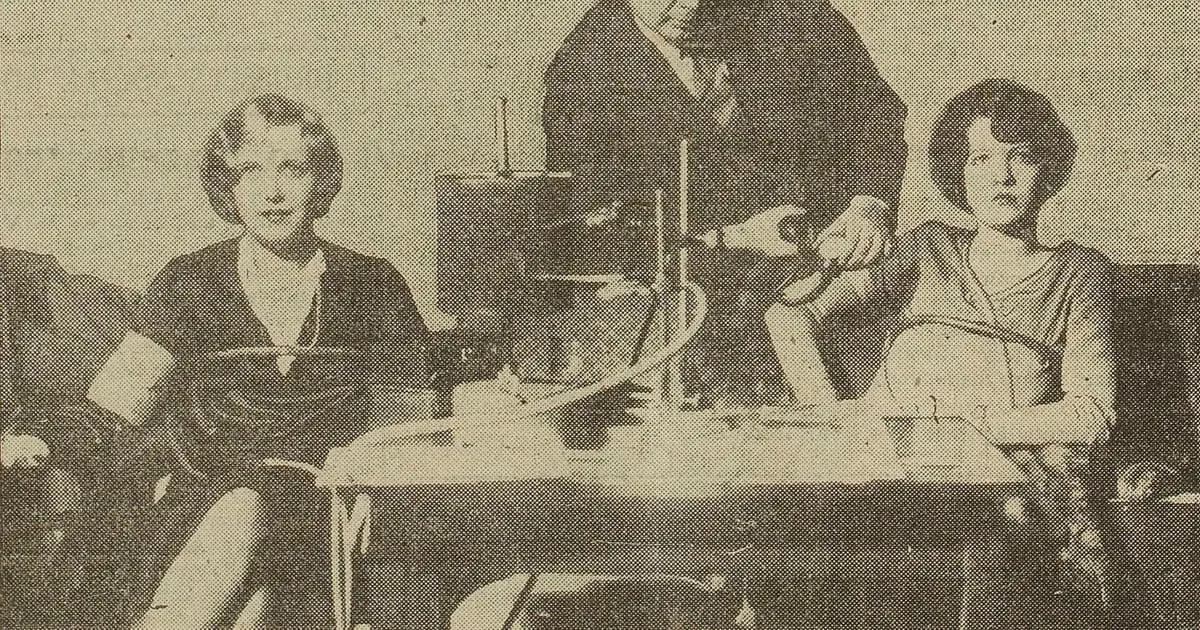
Around 1915, as a Harvard graduate student, Marston noticed that when people lied, their systolic blood pressure tended to rise. According to the family's account, the suggestion came from his wife, Elizabeth Holloway Marston, who remarked that whenever she was angry or excited she could feel her blood pressure climb.
Marston worked out a procedure of taking blood pressure at intervals during questioning and called it a deception test. The polygraph American police later used measured more things and was built by other people, but the founding idea started here.
In 1923 the idea went to court. A man named James Alphonso Frye was charged with murder in Washington. His lawyers called Marston as a witness: the blood pressure test showed Frye was telling the truth when he denied it. The court refused to admit the result.
The reason for the refusal is what put the case in the history books. The appeals court wrote that a scientific technique could only be admitted as evidence once it had gained general acceptance in its own field, and Marston's test had not. That principle became known as the Frye standard, and for decades American courts used it to decide which science was allowed into a courtroom.
Put another way, the man who laid the foundation of DISC was also the man whose work a court held up as an example of something not yet sound enough to rely on. It is worth remembering when you read your own DISC result, and this piece comes back to it at the end.
1928: the emotions of normal people
In Marston's day psychology was mostly interested in the unwell: disorder, psychosis, abnormal behaviour. The title of his 1928 book reads almost like an objection: Emotions of Normal People.
In it he proposed that everyday behaviour could be described by two questions. First: does a person see their surroundings as favourable, or as working against them? Second: do they see themselves as stronger or weaker than those surroundings?
Two questions with two answers each give four kinds of response. And the four names Marston chose are not quite the ones you see on a test today:
- Dominance: the surroundings are against me, and I am strong enough to push them back.
- Inducement: the surroundings are favourable, and I actively pull other people towards me.
- Submission: the surroundings are favourable, and I let them lead.
- Compliance: the surroundings are against me, I am not strong enough to change them, so I follow their rules.
Today the I is usually Influence, the S Steadiness and the C Conscientiousness. The newer names are far more flattering, since nobody enjoys being described as Submissive. But the originals reveal something the new ones hide: for Marston, DISC described how a person responds to a situation, not who that person is.
Why someone can be a D at work and an S at home
Take a familiar example. Lan runs a sales team. At the office she talks fast, decides fast, hates long meetings and cuts off anyone who rambles. Take the DISC test at work and she scores a very high D.
At her in-laws' house over Tet, Lan is the quietest person at the table. She does what her mother-in-law asks and does not argue about how the fruit tray is arranged or when the offerings go out. If she took the same test that evening, she might well come out S or C.
In Marston's terms there is no contradiction. At work she sees the environment as something to conquer and herself as up to it. At her in-laws' she is the newcomer, in the weaker position, and chooses to follow. One person, two situations, two responses.
This is why many people take DISC twice a few months apart and get different results. The test is not broken. It is measuring exactly what it was designed to measure: how you respond to whatever situation you had in mind while answering. So pick one concrete situation before you start, usually work, and hold on to it for the whole test.

Marston never made a DISC test
This is the detail that surprises people most. The 1928 book was theory only. Marston wrote no questionnaire, scored nobody, and never claimed the four letters as his property.
The person who turned the theory into a tool was an industrial psychologist named Walter Clarke, around the 1950s, when he assembled a checklist of adjectives for companies to use in hiring. In the 1970s John Geier developed it into a self-assessment profile, which eventually became DiSC — with a lower-case i — now a trademark of the publisher Wiley.
Because nobody owns DISC itself, anyone can write their own version. That is why there are dozens online, with different questions and different scoring, and why two sites can give you two different results. The DISC test on Thấu Mình is likewise an independent version built on the original theory, not Wiley's DiSC.
Wonder Woman, and the two women behind her
Back to 1941. Marston lived with his wife Elizabeth and another woman, Olive Byrne, in one household, raising their children together. It was kept private for years and only told openly long after his death. The 2017 film Professor Marston and the Wonder Women dramatised that story.
Biographers credit both women with leaving their mark on the character. The silver bracelets are usually traced to a pair Olive Byrne habitually wore. And the lasso that compels the truth hardly needs explaining: it is the blood pressure test that lost in court in 1923.
Marston said he wanted a character who showed that strength and gentleness could go together. Set beside DISC that fits closely: he never ranked Dominance above Submission. He saw all four as ways an ordinary person copes with the world.
Using DISC at work, usefully
DISC is popular in companies because it is easy to remember and easy to say out loud. Its most useful application is adjusting how you speak to other people rather than labelling them. Four concrete situations:
- Presenting to a high-D manager: put the conclusion in the first sentence and the reasons after. One page, three points, one recommendation. Detail goes in an appendix, in case they ask.
- Persuading a high-I colleague: show them how the idea will land with other people. They care less about the spreadsheet than about the story behind it.
- Handing a change to a high-S colleague: warn them early, explain why, and give them time. A sudden change at five o'clock on a Friday is the quickest way to lose them.
- Giving feedback to a high-C colleague: bring evidence. "This report is wrong on line 14 because the formula takes the wrong column" works far better than "could you have another look".
The most important thing about DISC at work is the one least often said: do not use it to decide who to hire. The common DISC instruments were designed to help people understand one another, not validated as predictors of who will do a job well. Using one to screen out candidates is using it for the wrong purpose, and in many countries a legal risk as well.
Reading your own result
The DISC test on Thấu Mình has 24 questions, takes about five minutes, and is scored on your own device. When you read the result, think of the man standing in a Washington courtroom in 1923. His idea was a good one and not yet sound enough to decide a person's fate. DISC is the same: an excellent way to start a conversation about how you work, and not good enough to end it.

Personality
What is the rarest personality type? The story behind “INFJs are only 1%”
Every few weeks a post goes round saying INFJ is the rarest type in the world. The figure is real, but it comes from a survey of Americans in the late 1990s, and it says much less about you than you might think.
19/09/2026 · 5 min read
Personality
Using personality tests decently: dos and don'ts from someone who works in HR
The company that publishes the MBTI itself advises against using it to hire people, yet it still turns up in interviews. This piece tells the story of the mother and daughter who wrote it, and draws the line between using tests to understand each other and using them to screen people out.
24/07/2026 · 3 min read