What is the rarest personality type? The story behind “INFJs are only 1%”
Published 19/09/2026 · 5 min read
Every few weeks a post goes round saying INFJ is the rarest type in the world. The figure is real, but it comes from a survey of Americans in the late 1990s, and it says much less about you than you might think.
If you have ever taken a sixteen-types test and come out INFJ, there is a good chance that within a week you read this sentence somewhere: “INFJ is the rarest personality type in the world, only about 1% of the population.” It usually comes with a paragraph about someone deep, hard to read, inward, and often lonely in a crowd.
Part of that sentence is true. To find out which part, you need the question almost every viral post skips: 1% of whom, counted when, and counted how?
Where the number comes from
The most-quoted percentages come from the MBTI manual published in 1998. Its authors surveyed around three thousand American adults, chosen so that the sample resembled the US population at the time, and counted how many fell into each type.
The results are usually reproduced like this. Most common is ISFJ at about 14%, then ESFJ at about 12% and ISTJ at about 12%. At the bottom sit ENFJ at about 2.5%, INTJ at about 2%, ENTJ just under 2%, and INFJ at about 1.5%. The 1% in the viral posts is the 1.5% rounded down to look tidier.
So calling INFJ the rarest has a basis. But the basis is a sample of Americans at the end of the last century, answering a specific English questionnaire. “Rarest in the world” has no basis at all, because nobody has ever surveyed the world that way.
What about anywhere else
The honest answer is that nobody knows. There has been no survey using a sample representative of, say, Vietnam's population to count the sixteen types the way the 1998 manual did.
The statistics you see on free test sites cannot answer the question either, for a simple reason: the people taking the test are not a random sample. They are curious about personality, online, aware of that site, and willing to spend ten minutes answering. They were already different from the general population before they clicked the first question.
There is a famous example of exactly this mistake, in another field. In 1936 the American magazine Literary Digest mailed a poll to around ten million people and predicted a landslide for Alf Landon in the presidential election. Franklin Roosevelt won 46 of the 48 states. The magazine had drawn its list from telephone directories and car registrations, and in the middle of the Depression only the comfortable had either. The bigger the sample, the more confident the magazine became, and the more confidently wrong.
Why INFJs seem to be everywhere online
Anyone who spends time in online personality communities will have noticed the paradox: the type called rarest seems to be the most numerous in any discussion about types.
At least three reasons stack up. First, people who enjoy analysing themselves and reading about inner life are more likely to seek out personality tests, and INFJ descriptions are written for precisely that reader. Second, a label attached to the word rare is more attractive, so someone who gets INFJ has more reason to mention it than someone who gets ISFJ. Third, INFJ descriptions tend to contain sentences almost anyone recognises in themselves: nobody truly understands me, calm outside and busy inside.
That last effect has a name, the Barnum effect, and this site has a whole piece on it. The quickest check is to read the description for a different type. If that fits you seventy or eighty percent too, the first one told you nothing in particular about you.
Rare does not mean more special
A rare type in a table only means that few people in that sample answered that way. It does not mean the type is deeper, cleverer or worth more.
ISFJ, the most common type in the table, is usually described as caring, careful, the one who keeps things running. An office staffed entirely by INFJs would be full of ideas and short of invoices filed on time. The common types are common for a reason.
How stable your own result is
One more thing worth knowing before you put four letters in your social media bio. In 1993 the psychologist David Pittenger reviewed studies of people retaking the MBTI after about five weeks, and found that somewhere between roughly 39% and 76% came out as a different type the second time.
Most of that comes from dimensions where you are nearly balanced. If you lean only slightly towards introversion, a tired morning or a busy week can be enough to put you on the extravert side next time. The letter changes; the person does not.
So when you take the sixteen-types test on Thấu Mình, the part most worth looking at is the four bars underneath rather than the four letters. Any bar sitting close to the midline is flagged as undecided. If you come out INFJ but your J beats your P by a few points, you are about as close to INFP.
So how to read “1%”
The number is real, but it describes about three thousand Americans filling in a questionnaire in the late 1990s. It says nothing certain about anyone else in 2026, and nothing at all about a person's worth.
If you come out INFJ, enjoy it. But the useful part of any result is the sentences you can match to something concrete you did in the last three months. The rest, rarity included, is decoration.
Personality
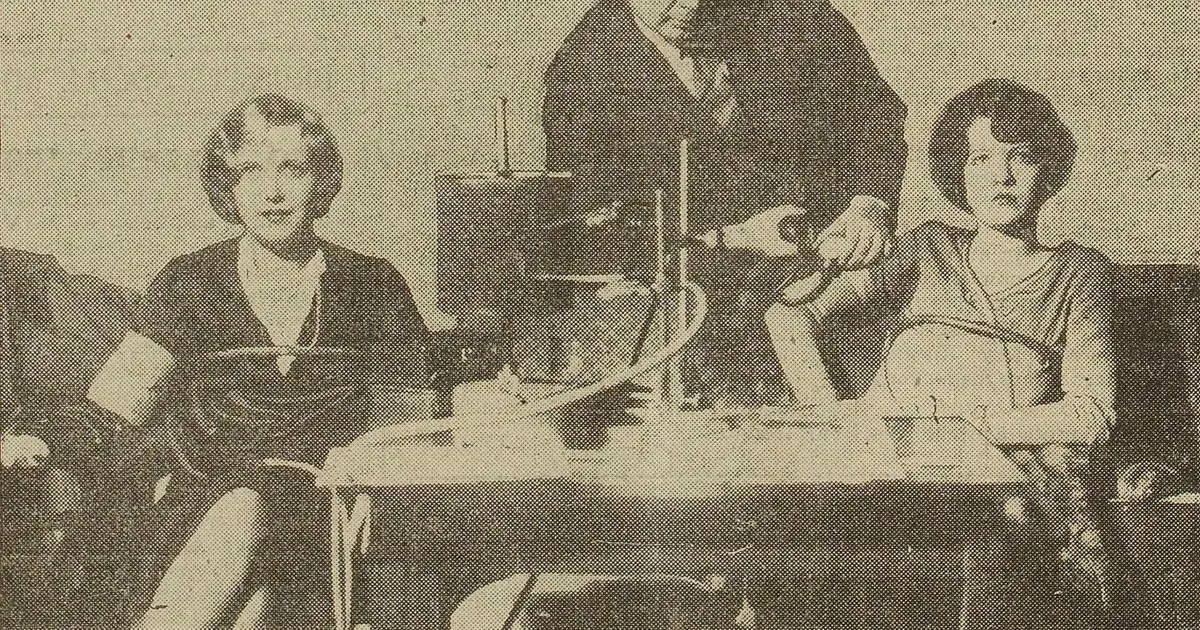
What is DISC? The man who built both the lie detector and Wonder Woman
The four letters every HR department uses have a father almost nobody can name. He lost a landmark court case, wrote a book about emotion in 1928, and later invented a heroine whose golden lasso makes people tell the truth.
18/09/2026 · 7 min read
Personality
Using personality tests decently: dos and don'ts from someone who works in HR
The company that publishes the MBTI itself advises against using it to hire people, yet it still turns up in interviews. This piece tells the story of the mother and daughter who wrote it, and draws the line between using tests to understand each other and using them to screen people out.
24/07/2026 · 3 min read