Born in January or early February: which animal sign are you, and the year Vietnam's new year came a month before China's
Published 14/07/2026 · 4 min read
Tết falls between 21 January and 20 February, so anyone born in that window has to check their own year. And in some years the Vietnamese and Chinese calendars disagree by a day, or even a month, so one birth date can give two animals.
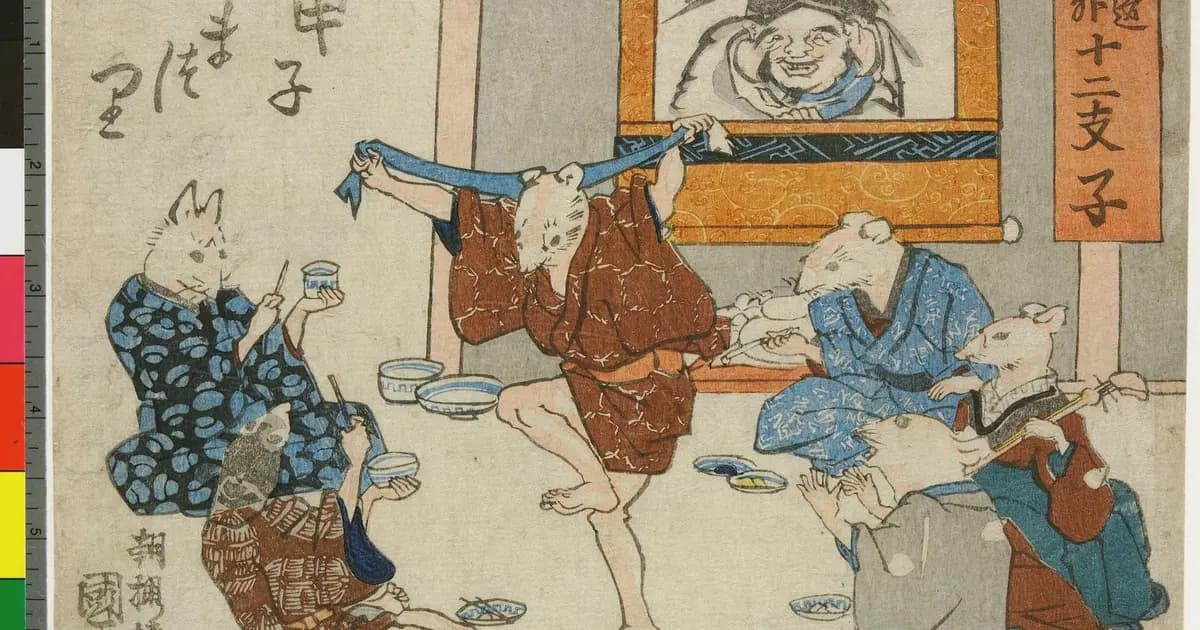
Someone born on 1 February 1985 reads their horoscope on a Chinese website and is told they are a Rat, Giáp Tý. They ask their mother, who says they are an Ox. Neither is mistaken.
"Which sign am I if I was born early in the year" is the most common question about the twelve animals. Most cases take a second to answer. A few need a calendar. And a very small group, like people born early in 1985, depends on whose calendar you use.
The animal follows the lunar year
The animal sign follows the lunar year, not the Gregorian one. The lunar year begins on the first day of Tết, which falls somewhere between 21 January and 20 February. That gives three cases:
- Born 1 to 20 January: certainly the animal of the previous Gregorian year, because Tết never comes earlier than 21 January.
- Born 21 February onwards: certainly the animal of the current year, because Tết never comes later than 20 February.
- Born between 21 January and 20 February: you need that year's Tết date.
For example, Tết in 1990 fell on 27 January. Someone born on 20 January 1990 is Kỷ Tỵ, the year of 1989; someone born on 30 January 1990 is Canh Ngọ. Tết in 2026 fell on 17 February, so a baby born on 10 February 2026 is still an Ất Tỵ Snake, not yet a Bính Ngọ Horse.
The lunar calendar is a calculation, not a book
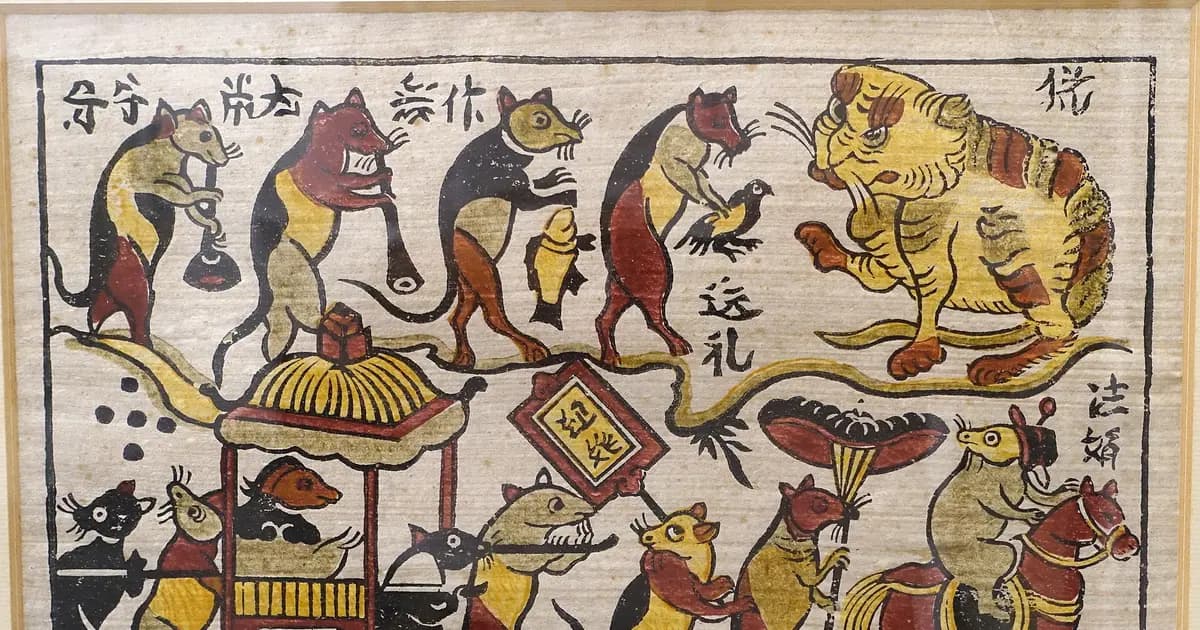
Many people picture the lunar calendar as a table of dates handed down from long ago. In fact it is worked out each year from astronomy: a lunar month begins on the day of the new moon, and the instant of the new moon has to be resolved against the clock of a particular place. If it falls near midnight, it belongs to one day in one time zone and to the next day in another.
Vietnam computes its lunar calendar on Hanoi time, UTC+7. China uses Beijing time, UTC+8. Most years the two agree on Tết. Not every year.
1968: two halves of one country, a day apart
In 1967 North Vietnam moved its official time from UTC+8 to UTC+7 and began computing the lunar calendar on the new clock. The South was still on UTC+8. At the very next new year the new moon fell between two midnights: by the northern calendar, the first day of Mậu Thân was 29 January 1968; by the southern and Chinese calendars, it was 30 January.
One explanation historians often mention is that this gap helped cause some units in central Vietnam to open fire a night early during the Tết Offensive. However much weight that deserves, it is true that two halves of one country saw in the new year on two different nights.
It had a small but concrete consequence: a baby born on 29 January 1968 in Hanoi was a Mậu Thân Monkey, while a baby born the same day in Saigon was an Đinh Mùi Goat. Both were correct by the calendar their family used.
1985: a whole month apart
The strangest case came in 1985. Leap months are placed according to the timing of new moons and solar terms, and those timings depend on the time zone. In late 1984 that one-hour difference was enough to give the Chinese calendar an extra leap tenth month and the Vietnamese calendar none. As a result Vietnam put Tết on 21 January 1985, and China on 20 February. The two countries welcomed the Ox year exactly a month apart.
That is the person at the top of this piece. Born on 1 February 1985, by the Vietnamese calendar they had been an Ất Sửu Ox for eleven days. By the Chinese calendar it was still the last month of Giáp Tý. Anyone born between 21 January and 19 February 1985 should read their sign from a Vietnamese source, or at least know that a Chinese site is working from a different calendar.
How the tool on this site handles it
The Thấu Mình zodiac tool converts your birth date to the lunar calendar on Vietnamese time, UTC+7, checked against published Tết dates across several decades. So for every date, including those close to Tết, it gives one definite animal by the Vietnamese calendar, along with the full lunar date so you can check it yourself.
If your birthday falls between 21 January and 20 February, the page adds a note that you were born near Tết. Not because it is unsure, but because that is the moment to ask your parents which calendar the family reckons by. For someone born in the South in 1968, or early in 1985, the answer may not be the one you grew up with.
Vietnamese zodiac
Trines, clashes and pairs: where the zodiac compatibility table comes from, and where it should stop
The two sets of rules people check most before a wedding. They are drawn from a circle of twelve points, nearly two thousand years old, and they contradict themselves in two places almost nobody notices.
16/10/2026 · 5 min read
Vietnamese zodiac
A whole-life reading for Canh Ngọ 1990, men: the chart of someone who carries the load
Roadside earth, the Horse, yang male — and 2026 is his own year. This piece reads each part of the chart, says where it is accurate, and says where it runs out.
21/09/2026 · 6 min read
Vietnamese zodiac
Canh Ngọ 1990, men: love, work, the household, and everyone else
Four areas read from a single image: the strip of earth beside a road. It holds the whole road up, everybody walks over it, and very little grows on it.
21/09/2026 · 6 min read