Trines, clashes and pairs: where the zodiac compatibility table comes from, and where it should stop
Published 16/10/2026 · 5 min read
The two sets of rules people check most before a wedding. They are drawn from a circle of twelve points, nearly two thousand years old, and they contradict themselves in two places almost nobody notices.
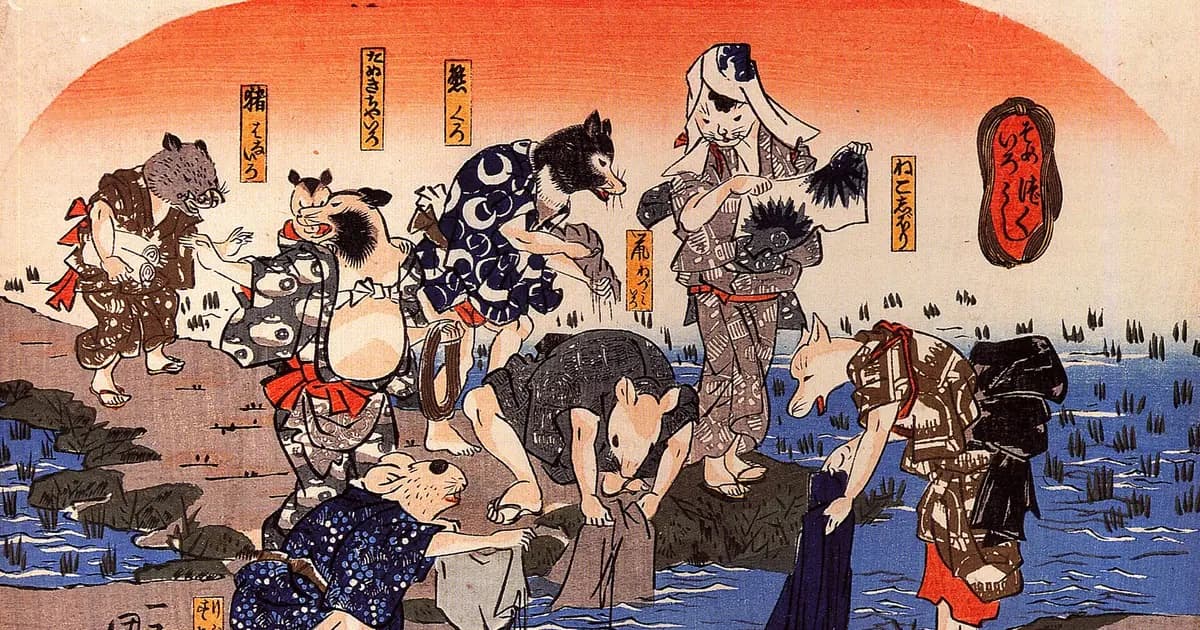
A scene many Vietnamese families will recognise. Two people have been together for three years, and at the first meeting with the parents one mother asks for their birth years. She goes quiet for a moment, then says softly to her child: “Tiger and Monkey clash, you know.” From that day the wedding plans acquire an extra voice, one that never sits in the room but carries a great deal of weight: a table of twelve boxes.
This piece does not argue about whether the table is right or wrong. It explains how the table was drawn, how long ago, and why even within the tradition a careful reader never uses it on its own to decide anything.
The twelve branches were a clock before they were animals
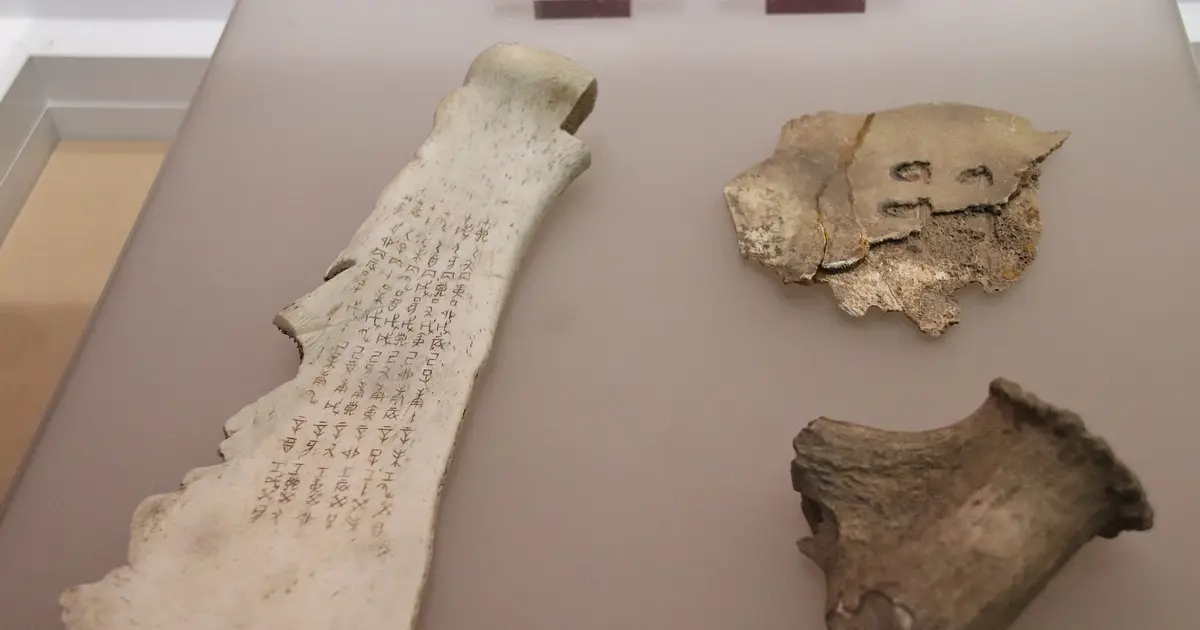
Tý, Sửu, Dần, Mão and the other eight earthly branches began as a way of counting time. Ancient Chinese astronomers used them to divide the day into twelve two-hour watches: the hour of Tý runs from 11 p.m. to 1 a.m., the hour of Ngọ sits around noon. They used them to name months and years too.
The animals came later. The earliest surviving text to list all twelve animals against the twelve branches is the Lunheng of Wang Chong, written in the first century AD. So before Dần was the Tiger, it was a position on the face of a clock.
That matters because it explains why the rules of harmony and clash look so geometric. They are geometry: relationships between positions on a circle divided into twelve equal parts.
The trines: four equilateral triangles
Arrange the twelve branches round a circle and take every fourth one, and you get an equilateral triangle. There are exactly four such triangles, and they are the four trines:
- Monkey – Rat – Dragon, the Water group.
- Tiger – Horse – Dog, the Fire group.
- Snake – Rooster – Ox, the Metal group.
- Pig – Cat – Goat, the Wood group.
Each group is assigned an element, and the traditional explanation is that the three signs in a group all serve one element and therefore support one another. In practice this is the best relationship anywhere in the table.
The clashes: three squares
Take every third branch and you get a square. There are three: Tiger – Monkey – Snake – Pig, Rat – Horse – Cat – Rooster, and Dragon – Dog – Ox – Goat. The four signs in each are said to clash, most strongly the pairs directly opposite each other on the circle, such as Rat and Horse or Tiger and Monkey.
Western astrology, developing entirely independently, reads the same angles. In the Tetrabiblos, written in the second century, Ptolemy treated planets 120 degrees apart as harmonious and planets 90 or 180 degrees apart as in tension. Two traditions reached the same geometry. That proves neither of them right, but it shows people at opposite ends of the world finding triangles settled and squares uneasy.
The pairs, and the two places the table contradicts itself
Alongside the trines are the six harmonious pairs: Rat – Ox, Tiger – Pig, Cat – Dog, Dragon – Rooster, Snake – Monkey, Horse – Goat.
Now set the two lists side by side. Tiger and Pig are a harmonious pair, yet both sit in the clashing square Tiger – Monkey – Snake – Pig. Snake and Monkey likewise: a harmonious pair, and in the same clash group. For the same two signs, the table says both harmony and clash.
Readers resolve this by giving the pair priority, treating the one-to-one bond as stronger than the group, and counting only the directly opposite pairs in the square, Tiger with Monkey and Snake with Pig, as a true clash. The zodiac tool on Thấu Mình resolves it the same way. But needing a secondary rule to settle a contradiction is a clear sign that this is a system people arranged, not a law.
How compatibility was actually read
Something many younger people do not know: in the tradition, checking ages before a marriage was never just a matter of looking up twelve animals. A careful reader would weigh the heavenly stems, the nạp âm element of each birth year, and if birth hours were known, each person's full chart. Two clashing signs whose nạp âm elements feed one another could still be considered workable.
Reducing a whole chart to a table of twelve boxes is largely a modern habit, from a time when information was copied onto wall calendars and later onto websites for convenience. A neat table is easy to remember, and it discards nearly everything the old readers actually weighed.
If your family takes this seriously
To be plain: no study has found that zodiac signs predict whether a marriage will last. But for many families the worry about a clash is real, and dismissing it outright rarely makes it go away.
- Ask exactly what your parents are worried about. Behind the words “your signs clash” there is often an unspoken worry about something else: a difference in temperament, in family circumstances, in how fast the relationship is moving. Only a named worry can be dealt with.
- Point out that the old readers looked at nạp âm and full charts. If the family believes in the system, suggesting a complete reading in the proper tradition usually goes down better than rejecting the system entirely.
- Let the family see how the two of you handle disagreement. No table of ages persuades like parents watching a couple argue and still find their way back.
To see how your own sign fares in the table, the zodiac tool and each sign's own page on Thấu Mình list its best and worst matches, with both contradictions above already resolved. Just read it the way the old readers did: one factor among many, and not the deciding one.
Vietnamese zodiac
A whole-life reading for Canh Ngọ 1990, men: the chart of someone who carries the load
Roadside earth, the Horse, yang male — and 2026 is his own year. This piece reads each part of the chart, says where it is accurate, and says where it runs out.
21/09/2026 · 6 min read
Vietnamese zodiac
Canh Ngọ 1990, men: love, work, the household, and everyone else
Four areas read from a single image: the strip of earth beside a road. It holds the whole road up, everybody walks over it, and very little grows on it.
21/09/2026 · 6 min read
Vietnamese zodiac
Giáp Tuất 1994, men: love, work, the household, and everyone else
Four areas read off one chart. Not four paragraphs vague enough to fit anybody — four consequences of a single image: a fire burning on a mountain top.
10/09/2026 · 5 min read