Sun sign, moon sign, rising sign: why your star sign description does not sound like you
Published 20/10/2026 · 5 min read
The newspaper horoscope, one paragraph per birthday, was invented by a British paper in 1930. Before that no astrologer read a person by one sign alone. Here are the three layers of a chart, and why the one you know best resembles you least.
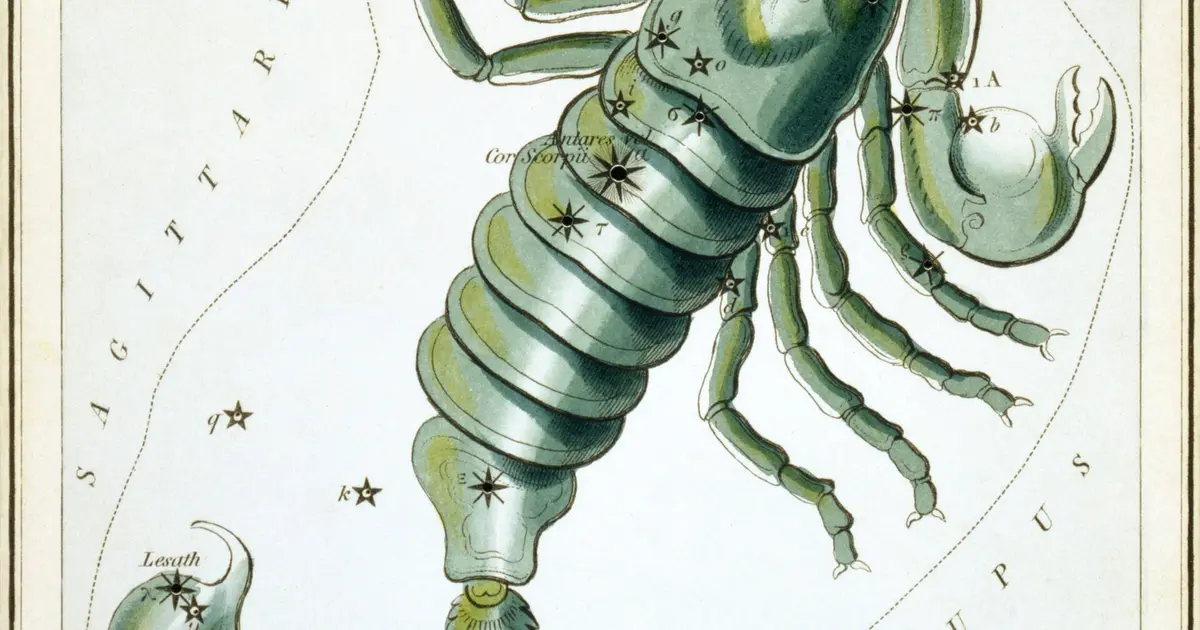
In August 1930 Princess Margaret, younger sister of the future Queen Elizabeth II, was born in Scotland. The British Sunday Express wanted something special for the occasion, so it asked the astrologer R. H. Naylor to cast the royal baby's chart and write a few lines of prediction.
The piece went down so well that the paper asked Naylor back. Before long he had a regular column. Later, so that everyone could follow it, the column divided its readers by the one thing everyone knows: their birthday. Twelve groups, one paragraph each. That is how the star-sign horoscope now found in every paper and app was born.
Before then, Western astrology never read a person by one sign. A full chart has dozens of factors, and the sun sign, the one tied to your birthday, is only one of them. It became the most famous because it is the only one that can be worked out without asking anything else.
Three layers, three different questions
If you remember only three factors of a chart, make it these:
- Sun sign. Needs only your birthday. In the traditional reading it describes what you are aiming at, who you are trying to become.
- Moon sign. Needs your birthday and a rough time of birth. It describes your emotional life, your private reactions, what shows when you are tired or nobody is watching.
- Rising sign. Needs your exact time of birth and your place of birth. It describes how you come across to strangers, the first ten minutes' impression.
The Moon crosses a sign in about two and a half days, so two people born on the same date can have different moon signs if one was born at dawn and the other near midnight. The rising sign changes far faster.
Why the rising sign changes about every two hours
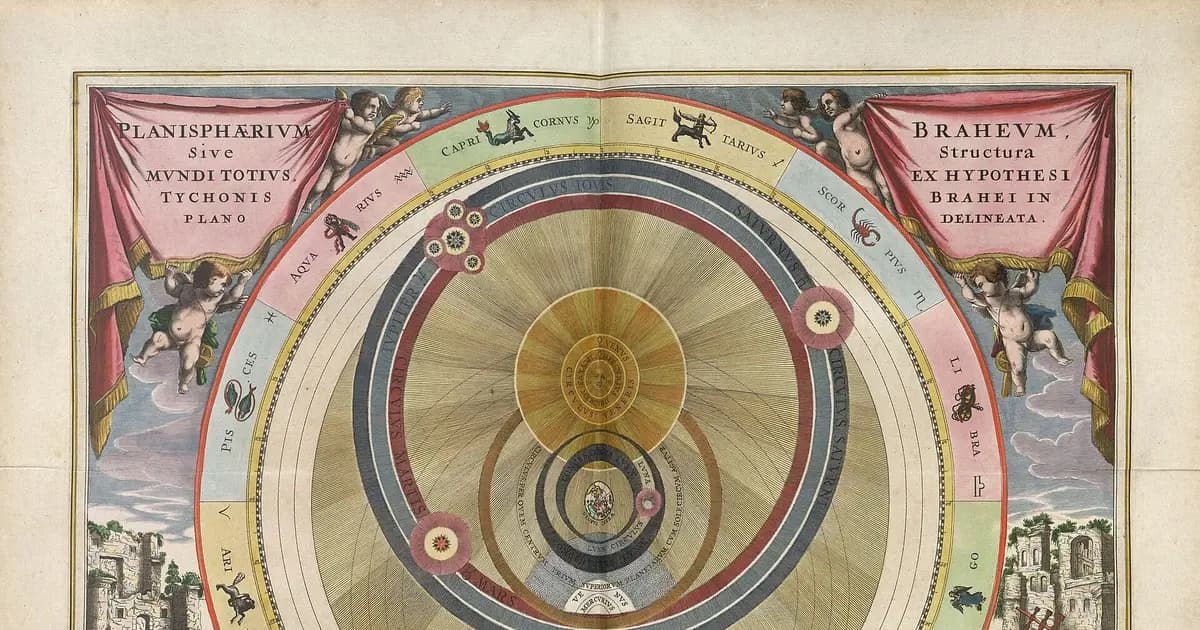
The rising sign is whichever sign of the zodiac is coming up over the eastern horizon at the moment you are born. Because the Earth turns once a day, all twelve signs pass that horizon in twenty-four hours. Divided evenly, that is about two hours each.
In practice it is not quite even: depending on latitude, some signs rise a little faster than two hours and some a little slower. But two hours is enough to see the consequence. Two people born on the same day in the same city three hours apart will almost certainly have different rising signs. Twins born ten minutes apart can differ too, if they happen to straddle the moment one sign gives way to the next.
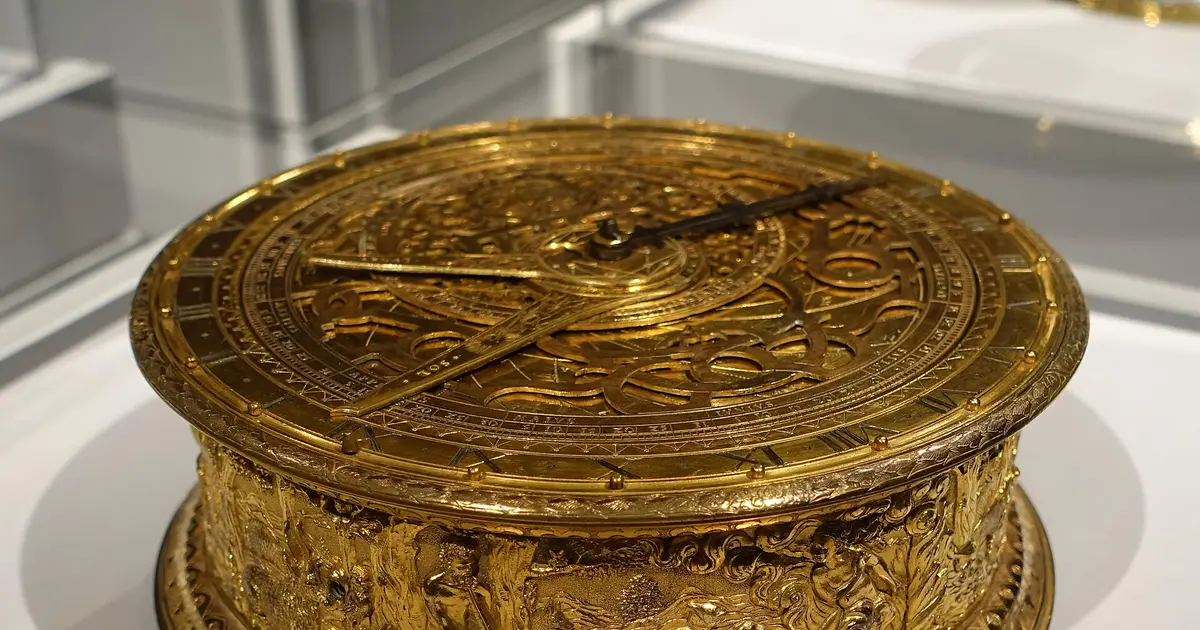
Astrologers once found the rising sign with a brass instrument called an astrolabe, a kind of astronomical calculator made of rotating plates. Read the time, turn the plate, and see which sign sits on the horizon. A computer does it now in a thousandth of a second, but it still needs the same two things: time of birth and place of birth.
Why your sign description sounds wrong
A great many people read the description of their sun sign and do not recognise themselves. A Leo is described as outgoing and happy at the centre of attention, while the Leo reading it feels rather quiet and shy of crowds.
By astrology's own logic that is unsurprising. What friends see in the first few meetings is the rising sign. What you feel inside on an evening alone is the moon sign. The sun sign is the part that takes years to show. Someone with a Fire sun but Water rising and moon is often seen as quiet and sensitive, nothing like the Leo on the page.
There is also a simpler possibility: sign descriptions tend to be written broadly enough for anyone to recognise part of themselves. If you read the description of a different sign and it fits too, both paragraphs are telling you less about yourself than you think.
Vietnamese astrology needs the hour too
The two traditions share something interesting here. The Vietnamese Tử Vi chart also needs a time of birth, counted in twelve two-hour periods. Without the hour you cannot place the Life Palace, and without the Life Palace you cannot lay out the other eleven.
Two systems developed independently at opposite ends of the world reached the same conclusion: the date of birth tells you which group you belong to, and only the hour tells you who you are within it.
Why this site only asks for the date
The star sign tool on Thấu Mình asks only for your birthday, because the other two layers need an exact time most people do not know. Giving a rising sign based on a guessed time would create a feeling of precision without the precision, which is worse than giving nothing.
If you want to find your time of birth, the best place to look is the hospital birth certificate, which in many places records the hour and minute. Asking your parents helps too, though after a few decades memory is usually only accurate to morning or afternoon. With the time in hand, you can lay out a full Tử Vi chart with the chart tool on this site, and look up your moon and rising signs on any astrology site that calculates from time and place.