The Zeigarnik effect: why unfinished work follows you all the way to bed
24/09/2026 · 5 min read
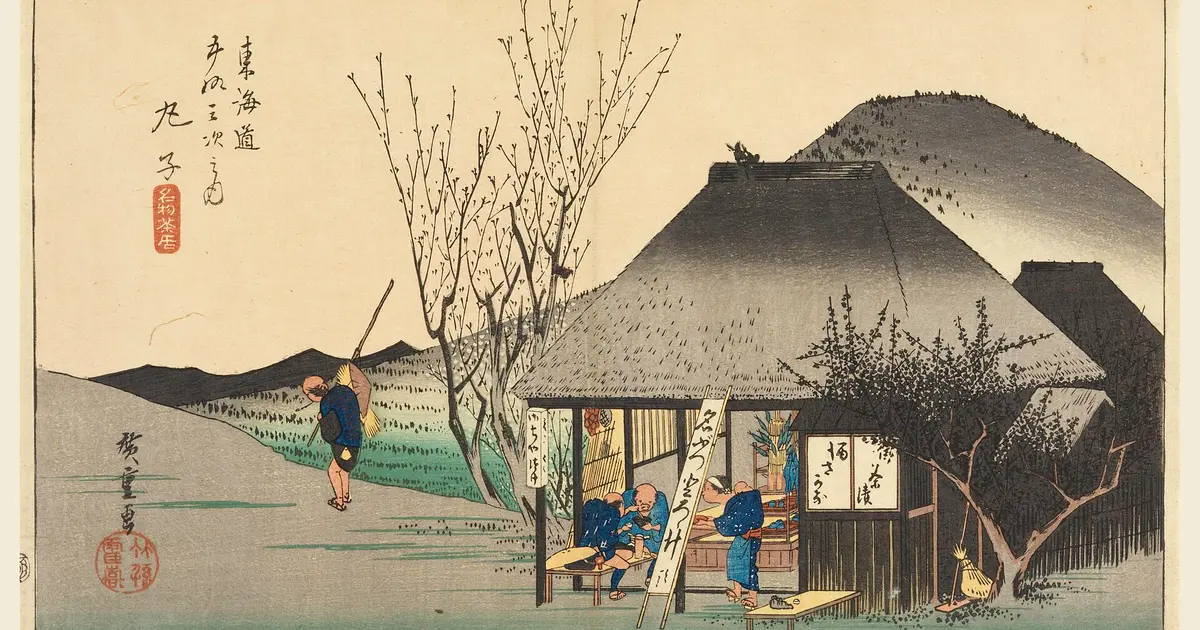
The story goes that in the mid-1920s the psychologist Kurt Lewin used to sit with his students in a café near the University of Berlin. One day they noticed the waiter. He wrote nothing down, yet remembered exactly what every table had ordered, even the tables that ordered a great deal.
After the group had paid, one of them asked the waiter what their table had ordered. He could not remember. Not vaguely; almost entirely. An open order sat sharply in his head, and a closed one vanished.
Among the students that day was a young Lithuanian woman named Bluma Zeigarnik. She decided to turn the observation into an experiment.
The 1927 experiment
Zeigarnik gave her participants around twenty small tasks: stringing beads, solving puzzles, modelling clay, counting backwards. Half of them she let run to completion. The other half she interrupted partway through and moved the person on to something else.
Afterwards she asked what they remembered. They recalled the interrupted tasks far more often, close to twice as often as the completed ones. The results were published in 1927, and the phenomenon has carried her name since.
Lewin explained it with a simple picture: starting a task builds something like a tension in the mind, released only when the task is finished. An unfinished task leaves the tension in place, and that is what keeps it sitting ready in memory.

The part of the science still argued over
Like many famous psychology experiments of its era, Zeigarnik's result has not always replicated. Some later studies found the effect, some did not, and some found the reverse: people sometimes remember finished tasks better, especially ones they are proud of.
Another finding from Lewin's group has held up better. Maria Ovsiankina, another of his students, showed that when interrupted, people tend to go back and finish the task even when nobody asks them to, and even when the task is pointless. This Ovsiankina effect has replicated far more reliably.
Put the two together and the picture is this: unfinished work may not always be remembered better, but it almost always pulls our attention back. It does not lie still.
Three in the morning, and the to-do list
Everyone knows the scene. You are nearly asleep when your head pipes up: you still haven't answered your manager's email, the electricity bill is unpaid, Monday's report is only half done. Nothing is urgent enough to get up for, but thinking about it wakes you anyway.
That is the tension Lewin described, except that instead of ten small tasks in a laboratory, there are dozens of unfinished things at once, each wanting a little attention.
The entertainment industry understands this perfectly. Every episode of a series ends at the tensest moment, and the button that plays the next one counts down only a few seconds. An unfinished story is the hardest thing to put down.
How to quiet the noise without finishing
In 2011 two American psychologists, E. J. Masicampo and Roy Baumeister, published a series of experiments with a very practical question: if unfinished tasks keep occupying space in the mind, can that space be freed without finishing them?
They had participants think about an important goal that was still incomplete. One group was asked to write a concrete plan: what they would do, when, and where. The other was not. Then both groups did a reading task that needed concentration.
The group without a plan was interrupted more by thoughts of the unfinished goal and read worse. The group that had written a plan was barely affected, even though the goal was no nearer to being done. The title of their paper sums up the finding: consider it done.
In other words, the mind does not demand that everything be finished at once. It only needs to know that each thing has somewhere to go. A single line such as “Tuesday, 9 a.m., call Hung about the contract” is enough to let the tension ease.
Putting the effect to work
- Before bed, write down the three unfinished things on your mind, each with its next step and when you will do it. You do not have to do them, only write them. This is the 2011 experiment applied directly.
- When you have to stop a large piece of work, stop in the middle rather than at a natural break. Ernest Hemingway made a habit of stopping while he still knew what the next sentence would be, so that he could start straight away the next day. The pull of the unfinished brings you back.
- If you are putting off starting something, start it for two minutes only. Open the document, write a heading, put down three bullet points. Once it is unfinished, the Ovsiankina effect does the rest: you will want to come back.
- Notice the unfinished things you no longer intend to do. They still take up room. Deliberately crossing one off the list is another way of closing it, and sometimes the most freeing one.
Bluma Zeigarnik later returned to the Soviet Union and spent decades working in clinical psychology in Moscow, where she is remembered as one of the founders of the field. But her name travelled round the world thanks to a waiter in Berlin, who never knew he had ended up in the textbooks because he forgot what one table had ordered.