Master numbers 11, 22 and 33: where the rule came from, how many people carry one, and why not to be pleased
Published 28/08/2026 · 4 min read
About one person in fifteen born between 1960 and 2005 has a life path of 11, more than have a plain 2. This piece traces where the master-number rule came from, counts how common it really is, and suggests a level-headed way to read it.
Among the messages people send to numerologists, one kind turns up constantly: "I got 11, does that mean I'm an old soul?" Or: "They say 22 is the master builder, so why haven't I built anything?" The second sounds funny but it is not rare. A number called "master" easily turns into a debt.
The rule itself is simple. When reducing a total to one digit, if you land on 11, 22 or 33, you stop there instead of going on to 2, 4 or 6. What is rarely said is how old that rule is, and how common the result.
Pythagoras wrote none of this down
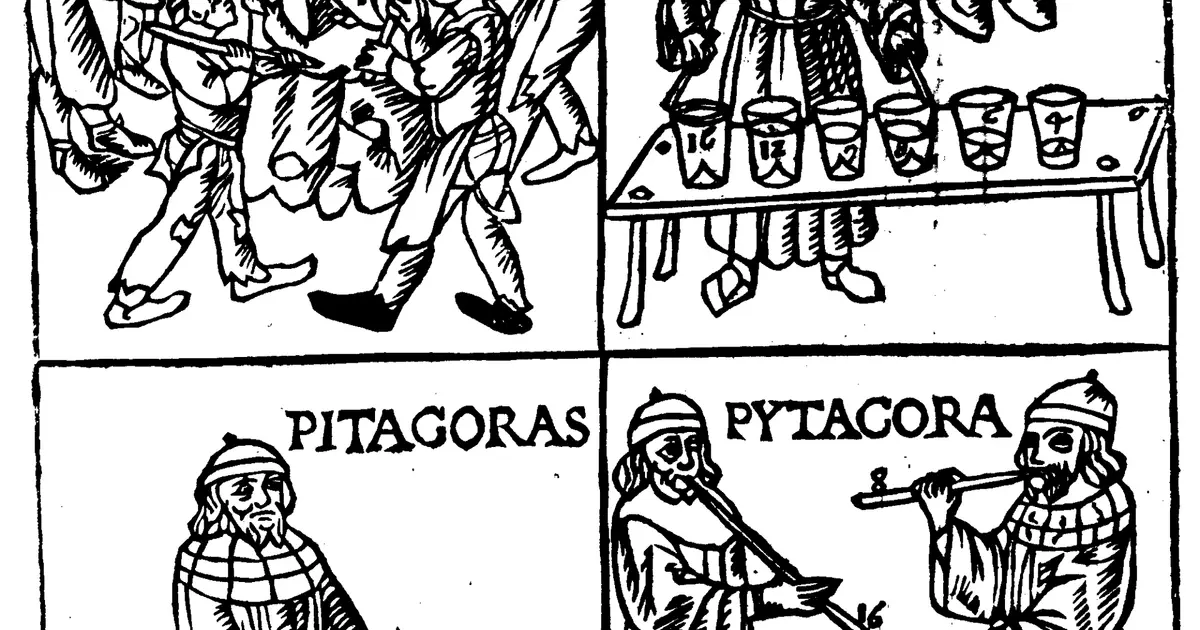
Modern numerology likes to call itself "Pythagorean". But Pythagoras, the Greek philosopher of roughly the sixth century BC, left no text written by his own hand. Everything known about him comes from students and from writers several centuries later.
What they record most reliably is his fascination with ratio. The story goes that he noticed two strings in a ratio of 2:1 sound an octave, and 3:2 a fifth. For the Pythagoreans, number was the structure of music and of the cosmos. They were not working out anybody's birthday.
A rule from early twentieth-century America
Numerology by birth date and name, as we know it now, took shape in the United States early in the twentieth century. A name often cited is Mrs L. Dow Balliett of Atlantic City, who published a run of books on the "vibration" of numbers between about 1905 and 1908. Her student Juno Jordan went on systematising the rules for decades afterwards. The idea of keeping 11 and 22 intact is usually traced to this line.
So the master-number rule is not much more than a hundred and twenty years old. Being young does not make it wrong. But when someone says "the ancients held 11 sacred", the claim needs checking rather than accepting. As for 33, even today's numerologists disagree: some schools treat it as a master number and some do not.
Counting: how many people have an 11
We counted every birth date from 1 January 1960 to 31 December 2005, using the same method as the numerology tool on this site: reduce the day, month and year separately, then add. The result:
- 11: about 6.6 per cent of birth dates, one person in fifteen.
- 2: only about 4.5 per cent, fewer than 11.
- 22: about 2.9 per cent.
- 33: under 1 per cent, about 0.9.
- 1, 3, 5, 7, 8 and 9: about 11 per cent each.
The striking figure is that 11 outnumbers 2. The reason is plain: most people who "would have been" a 2 have a total of exactly 11 and get kept there. In a class of forty, two or three people will have an 11 on average. A trait that many people share can hardly be a mark of rarity.
How the three are described
- 11: a 2 turned up high. Sensitive, strongly intuitive, and easily overwhelmed by that very sensitivity.
- 22: a 4 with ambition. Good at turning ideas into working structures, with the pressure of being expected to.
- 33: a 6 at its most demanding. Caring for others to the point of forgetting yourself.
Notice that all three descriptions come in two halves: an ability, and what it costs. Books tend to stress the first half. People who carry these numbers, describing themselves, tend to mention the second.
What it does not mean
A master number is not a rank. It does not say you are more special, more purposeful or higher in potential than someone with a 5. A closer description: the same direction, at higher pressure.
Back to the message about not having built anything. If you carry a 22 and feel you are falling behind, remember that 2.9 per cent of people share it, and most of them live perfectly ordinary lives. If a number leaves you feeling you owe the world something, it is doing you more harm than good.
The most useful approach: read both the 11 and the 2, or the 22 and the 4, and see which fits you better. Plenty of people find the reduced one closer, and that is fine. The numerology tool on Thấu Mình flags a master number when you have one and shows every step of the addition; add the two digits once more and you have the reduced number to read alongside it.
Numerology
What your name says in numerology: expression, soul urge and personality numbers, and the trouble with Vietnamese tone marks
By the numerology table, the Vietnamese names Thu Hà and Thu Hạ get identical numbers, because tone marks are stripped before counting. This piece explains the three name numbers, the 1533 alphabet behind them, and what to know before changing a name for a number.
02/09/2026 · 4 min read
Numerology
How to calculate your life path number, and why two sites give you two different answers
Someone born on 1 January 1980 can be a 2 on one site and an 11 on another. This shows exactly where the arithmetic forks, tells the story of the number that broke the Pythagoreans, and explains why Thấu Mình picks one method over the other.
09/07/2026 · 5 min read